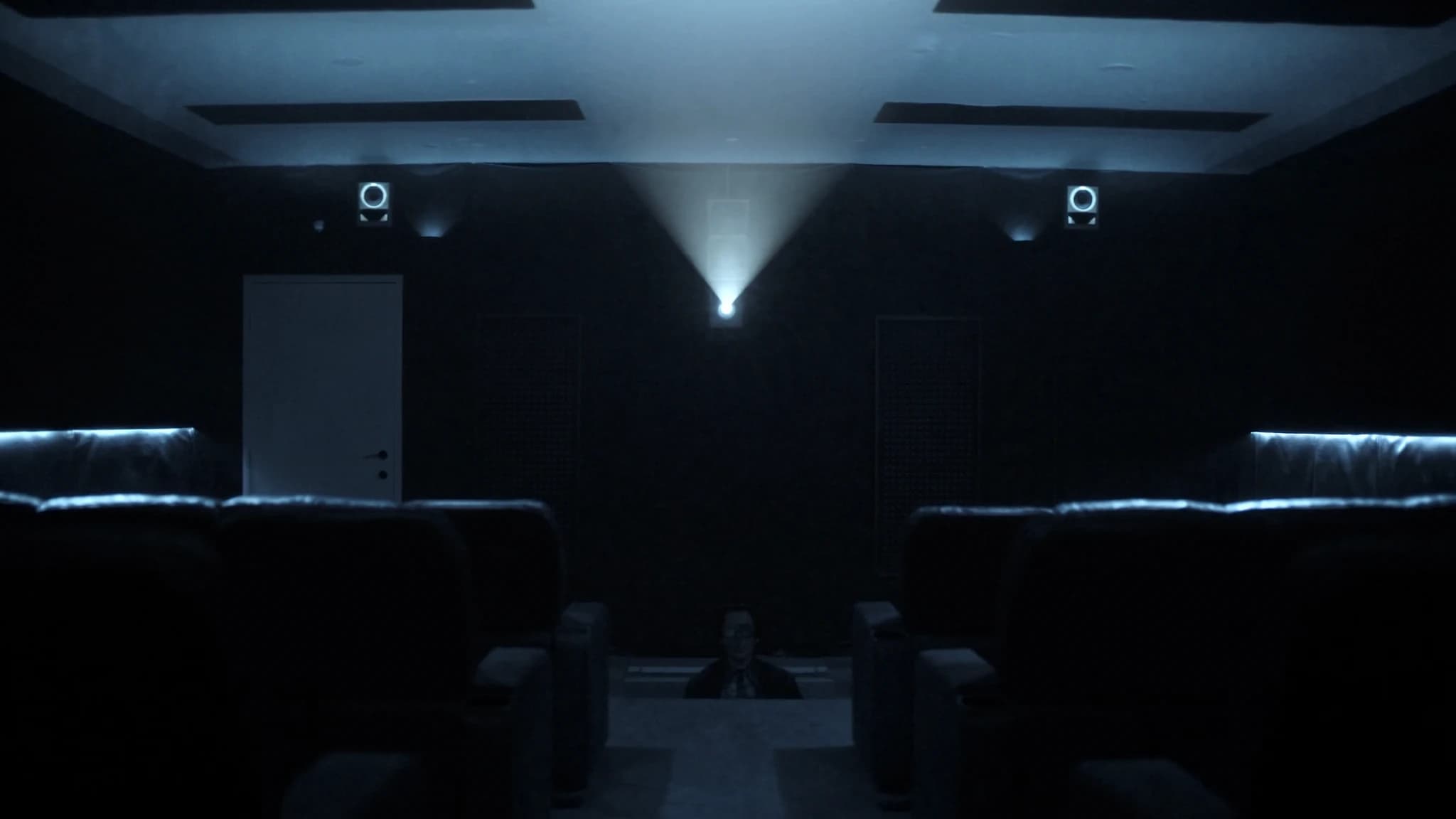
In-Ceiling Surround Sound: 5.1.2 and 5.1.4 Explained

In-ceiling speakers are a powerful solution for delivering immersive surround sound and Dolby Atmos height effects without cluttering your room with floor-standing or wall-mounted enclosures. This guide explains the 5.1.2 and 5.1.4 configurations, covering placement, driver types, backboxes, wiring, and integration with your main system for a professional-grade cinema experience.
Key takeaways
- 5.1.2 uses two overhead channels; 5.1.4 uses four for more precise height effects.
- Place height speakers at 30-55 degree angles from the listener for optimal Dolby Atmos performance.
- Angled drivers improve localization and are strongly recommended over flat drivers for overhead channels.
- Backboxes are essential for acoustic isolation, preventing sound leakage and improving bass response.
- Use 14- or 16-gauge wire, set crossovers to 80-120 Hz, and calibrate levels with a sound meter.
- Choose in-ceiling speakers with wide frequency response, high sensitivity, and timbre-matching for your main system.
Understanding 5.1.2 and 5.1.4 Configurations
A 5.1.2 system consists of five ear-level channels (left, center, right, left surround, right surround), one subwoofer, and two overhead channels for height effects. The 5.1.4 system adds two more overhead channels for a total of four height speakers, providing more precise object-based audio placement. Both configurations are standard for Dolby Atmos and DTS:X, with the overhead channels delivering sounds like rain, helicopters, or ambient cues from above.
The number after the decimal indicates the subwoofer count (typically 1), and the final digit denotes the number of height channels. For most home theaters, 5.1.2 offers a significant upgrade over traditional 5.1, while 5.1.4 is the sweet spot for enveloping immersion without the complexity of a full 7.1.4 or 9.1.6 system.
Optimal In-Ceiling Speaker Placement
For 5.1.2, place the two height speakers directly above the listening position, slightly forward of the main seating area. Dolby recommends an angle of 45 to 55 degrees from the listener's ear level, which typically means the speakers should be positioned about 2-3 feet in front of the main listening spot. In a 5.1.4 setup, the four speakers form a rectangle: the front pair should be placed about 30-45 degrees forward of the listener, and the rear pair about 30-45 degrees behind, all at ear-to-ceiling angles of 30-55 degrees.
Avoid placing height speakers too close to walls or directly above the listener, as this can cause localization issues. Use a laser pointer or string to map out the angles before cutting holes. For rooms with sloped ceilings, adjust the angle so the drivers aim toward the listening area. SSOUNDS in-ceiling models feature swivel tweeters to fine-tune dispersion even after installation.
Angled vs. Flat Drivers: Which to Choose?
In-ceiling speakers come with either flat (flush) drivers or angled (pivoting) drivers. Flat drivers are simpler and cheaper but project sound straight down, which can make height effects sound like they're coming from directly above rather than from a specific point in space. Angled drivers allow you to tilt the tweeter and sometimes the woofer toward the listening position, improving localization and creating a more convincing overhead soundstage.
For Dolby Atmos, angled drivers are strongly recommended because they help steer the sound to the listener's ears, mimicking the effect of speakers mounted on the ceiling at an angle. SSOUNDS offers in-ceiling models with adjustable tweeter waveguides and pivoting woofer baskets, ensuring that even with fixed ceiling cutouts, you can optimize the aim for your room. If your ceiling is high (over 10 feet), angled drivers become even more critical to maintain clarity.
The Importance of Backboxes and Acoustic Isolation
Backboxes are enclosures that mount behind the in-ceiling speaker, separating the front and rear sound waves. Without a backbox, the speaker operates in infinite baffle mode, which can cause sound to leak into adjacent rooms and reduce bass response. For surround and height channels, backboxes are essential to prevent muddiness and ensure consistent performance across frequencies.
SSOUNDS backboxes are constructed from heavy-gauge steel with internal damping material to minimize resonance and sound transmission. They also protect the speaker from dust and debris in the ceiling cavity. When installing, ensure the backbox is securely fastened to the ceiling joists and that the speaker's mounting wings clamp tightly to the drywall. For new construction, pre-install the backbox and run wiring before drywall goes up.
Wiring and Integration with the Main System
In-ceiling speakers require running speaker wire from the amplifier or AV receiver to each location. Use 14- or 16-gauge wire for runs under 50 feet; for longer distances, step up to 12-gauge. Label each wire at both ends to avoid confusion during connection. If your receiver has dedicated height channel outputs (usually labeled 'Front Height' and 'Rear Height' or 'Atmos'), connect accordingly. For 5.1.2, use the two height outputs; for 5.1.4, use all four.
Integration involves setting the receiver's speaker configuration to 'Small' for the in-ceiling speakers (even if they are full-range) to redirect bass to the subwoofer. Set the crossover typically between 80-120 Hz. Run the receiver's auto-calibration (e.g., Audyssey, Dirac) to measure distances and levels. For best results, manually verify the polarity and phase—some in-ceiling speakers have a switch to invert polarity if needed. SSOUNDS recommends using a sound level meter to calibrate each channel to 75 dB SPL at the listening position.
Choosing the Right In-Ceiling Speaker for Your System
Not all in-ceiling speakers are created equal. For a high-performance 5.1.2 or 5.1.4 system, look for speakers with a wide frequency response (at least 60 Hz to 20 kHz), high sensitivity (88 dB or higher), and a power handling that matches your amplifier. Coaxial designs (where the tweeter is mounted inside the woofer) offer better phase coherence, while dual-woofer models can provide more output for larger rooms.
SSOUNDS in-ceiling speakers are engineered for professional-grade home theater, featuring silk dome tweeters, polypropylene or carbon-fiber cones, and robust crossover networks. They are designed to blend seamlessly with SSOUNDS floor-standing and bookshelf speakers for a timbre-matched system. For Atmos, consider models with a dedicated waveguide that matches the dispersion pattern of your main speakers. Always test the speaker's sound with a demo track before finalizing placement.
Frequently asked
Can I use regular bookshelf speakers for height channels instead of in-ceiling?
Yes, but they require mounting on the ceiling or high on walls, which can be visually intrusive and less safe. In-ceiling speakers are designed for flush installation, offering a cleaner look and better dispersion for overhead effects.
Do I need a special amplifier for 5.1.4?
You need an AV receiver or processor that supports at least 9 channels (5.1.4) or 7 channels (5.1.2). Many modern receivers have built-in Dolby Atmos processing and dedicated height channel outputs.
What is the ideal ceiling height for in-ceiling Atmos speakers?
Dolby recommends ceiling heights between 7.5 and 12 feet. Higher ceilings may require angled drivers and higher output speakers to maintain clarity. For ceilings above 12 feet, consider using additional speakers or larger models.
Can I mix different brands of in-ceiling speakers with my main system?
It's possible, but timbre mismatches can be noticeable. For best results, use speakers from the same brand and series to ensure consistent sound signature across all channels.
How do I hide the wires for in-ceiling speakers?
Run wires through the ceiling cavity, using CL2 or CL3 rated cable. For existing construction, use a fish tape to pull wires from the receiver location to each speaker hole. For new construction, run wires before drywall is installed.
Building or upgrading a system?
SSOUNDS engineers and manufactures professional PA worldwide — from a single room to stadium scale.