スマートホームオーディオ統合:完全ガイド
スマートホームオーディオ統合は、ストリーミングサービス、音声アシスタント、マルチルーム制御、照明シーンをシームレスなエコシステムに融合し、サウンド体験を一変させます。プロ用PAメーカーとして、SSOUNDSはスタジアムであれリビングルームであれ、信頼性の高い高忠実度オーディオを支えるエンジニアリングを理解しています。このガイドでは、天井スピーカーからシステムの信頼性まで、性能を発揮するスマートオーディオセットアップの構築を支援します。
主なポイント
- 柔軟性と品質のために、専用のオーディオサーバーまたはマトリックスでストリーミングを集中化する。
- メインシステムを制御するには別の音声アシスタントデバイスを使用し、クリティカルリスニングには組み込みスマートスピーカーを避ける。
- マルチルームには、信頼性のためにマルチゾーンアンプと有線ネットワークに投資する。
- クリーンで一貫したサウンドのために、適切な配置で密閉型天井スピーカーを選択する。
- IPまたはドライコンタクトトリガーを使用して、スマートホームハブ経由で照明を統合する。
- ドロップアウトを防ぐために、イーサネット、静的IP、UPSを備えた堅牢なネットワークを構築する。
ストリーミングとソース管理
スマートオーディオシステムの核心は、どのように音楽をスピーカーに届けるかです。最新のシステムは、Wi-Fi、Bluetooth、または有線接続を介してSpotify、Apple Music、Tidal、Qobuzなどのストリーミングサービスをサポートします。マルチルームセットアップでは、AirPlay 2、Google Cast、Sonosなどのプラットフォームを検討しますが、これらはしばしばそのエコシステムに限定されます。より柔軟なアプローチは、複数の入力を接收し、それらをゾーンに分配する専用のオーディオマトリックスまたはDSP(デジタルシグナルプロセッサ)を使用することです。
SSOUNDSのエンジニアは、マルチチャンネルアンプに接続された集中型オーディオサーバーまたはストリーマー(例:Bluesound NodeやRoonを実行するPC)の使用を推奨しています。これにより、ロスレスストリーミング、低遅延、および単一の音声アシスタントからの独立性が得られます。信頼性のために、ネットワークを有線接続してください。イーサネットは、特にハイレゾオーディオの場合、一貫したストリーミングのために常にWi-Fiより優れています。
音声アシスタントと制御
Amazon Alexa、Google Assistant、Apple Siriなどの音声アシスタントは便利さを追加しますが、安価なスマートスピーカーに組み込まれているとオーディオ品質を損なう可能性があります。より良いアプローチは、専用の音声アシスタントデバイス(Echo DotやNest Miniなど)を使用して、赤外線、Wi-Fi、またはスマートホームハブを介してメインオーディオシステムを制御することです。これにより、主要なスピーカーは音質に集中できます。
全館音声制御には、主要な部屋にマイクアレイ(例:天井取り付けマイク)を統合し、中央プロセッサに供給します。SSOUNDSは、大規模会場で音声制御を展開するためにインテグレーターと協力してきましたが、同じ原則が家庭にも当てはまります。マイクはハウリングを避けるためにスピーカーから離して配置し、ノイズキャンセリングアルゴリズムを使用します。プライバシーのために、物理的なミュートスイッチまたはクラウドではなくローカルで音声を処理するシステムを使用します。
マルチルームオーディオとゾーン制御
マルチルームオーディオでは、部屋ごとに異なる音楽を再生したり、同じトラックをどこでも同期させたりできます。主要なコンポーネントは、マルチチャンネルアンプ(または複数のアンプ)、マトリックススイッチャーまたはDSP、および各ゾーンのスピーカーです。天井スピーカーは目立たない外観で人気がありますが、壁埋め込み型やブックシェルフ型も使用できます。
シームレスなマルチルームには、独立した音量、ソース選択、グループ化をサポートするシステムを使用します。SSOUNDSの大規模マルチゾーンシステムへのアプローチは、低遅延、高チャンネル数の分配にDanteまたはAVBネットワーキングを使用します。ほとんどの家庭には過剰ですが、信頼性の教訓は適用されます。オーディオ専用のネットワークVLANを使用し、スイッチのデイジーチェーンを避け、ケーブルを適切に終端します。住宅用には、Sonanceのような業務用グレードのアンプ、またはDenonやYamahaのマルチゾーンレシーバーを検討してください。
天井スピーカー:配置と選択
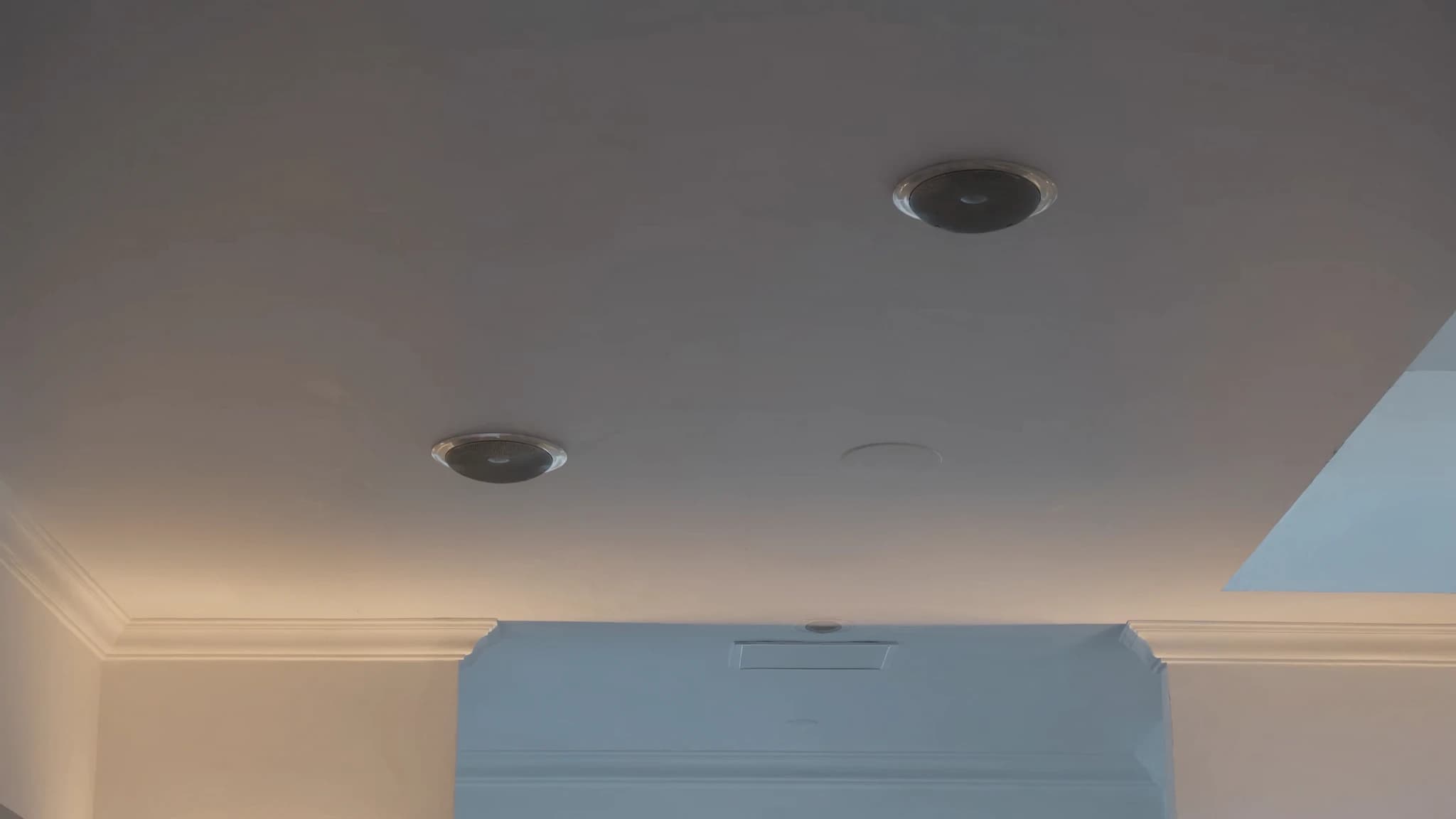
天井スピーカーは、建築に溶け込むため、多くのスマートホームオーディオシステムのバックボーンです。主要な要素は、ドライバーサイズ(6.5インチは低音と明瞭さのバランスが良い)、ツイータータイプ(滑らかな高音にはソフトドーム、より詳細にはメタル)、およびバックキャンの有無(密閉型対開放型)です。開放型スピーカーは天井裏と結合し、低音を濁らせる可能性があるため、よりクリーンなサウンドには密閉型バックキャンを使用します。
配置が重要です。ステレオイメージングには、スピーカーを6〜10フィート離して聴取エリアに向けて角度を付けます。全館BGMには、グリッド状に8〜12フィート間隔で配置します。スピーカーを空調吹き出し口や照明器具の近くに置かないでください。SSOUNDSのエンジニアは、サウンドレベルメーターとピンクノイズを使用してゾーン間のレベルを調整することを推奨しています。新築に設置する場合は、CL2定格のスピーカーケーブルで事前配線し、将来のアップグレード用にコンジットを敷設します。
照明とシーンの統合
スマートオーディオは、照明と同期すると真に没入感が増します。たとえば、「ムービーナイト」シーンでは、照明を暗くし、プロジェクタースクリーンを下げ、オーディオをサラウンドサウンドに切り替えることができます。これには、照明(Philips Hue、Lutron)とオーディオシステムの両方と通信するスマートホームハブ(Hubitat、Home Assistant、Control4など)が必要です。
統合方法:IP制御(オーディオシステムにREST APIまたはtelnetコマンドがある)、赤外線(古い機器用)、またはドライコンタクトリレー(単純なオン/オフ用)を使用します。SSOUNDSのDSPプラットフォームは、低音のヒットでストロボを点滅させるなど、オーディオイベントに基づいて照明シーンを起動できるGPIOトリガーをサポートしています。信頼性のために、シーンはシンプルに保ちます。各トリガーを個別にテストし、可能であればハブとオーディオシステム間を有線接続します。
信頼性の維持:ネットワークと電源
接続できない、またはオーディオが途切れるシステムほどスマートホーム体験を台無しにするものはありません。堅牢なネットワークから始めます。IoTデバイス用の専用ルーターを使用し、ストリーミングプロトコルのマルチキャストを有効にし、重要な機器(アンプ、ストリーマー、ハブ)に静的IPを設定します。Wi-Fiは便利ですが干渉しやすいため、常設設置ではすべてのオーディオコンポーネントにイーサネットを配線します。
電源品質が重要です。ネットワークスイッチとオーディオプロセッサにはUPS(無停電電源装置)を使用し、電圧低下時の再起動を防ぎます。すべての機器にサージ保護を施します。信頼性が不可欠なツアーサウンドでのSSOUNDSの経験は、すべての接続をロックする(例:スピーカーにはNeutrik SpeakON、ネットワークにはEtherCON)ことを教えています。家庭では、高品質のバナナプラグまたはバインディングポストを使用し、すべてのケーブルにラベルを付けます。
よくある質問
既存のステレオレシーバーをスマートホームシステムで使えますか?
はい、リモコンまたはIP制御があれば可能です。スマートIRブラスター(Broadlinkなど)やWi-Fi対応スイッチを使ってオン/オフを切り替えます。音量調節には、電動ポテンショメーターやスマートプリアンプが必要になる場合があります。
遅延なく部屋間で音楽を同期する最善の方法は?
有線ネットワークと、AirPlay 2、Google Cast、またはSonos、Denon HEOS、Bluesoundなどの専用マルチルームシステムのようなプロトコルを使用します。プロフェッショナルグレードの同期には、マスタークロックを備えたDanteまたはAVBを使用します。
天井スピーカーにサブウーファーは必要ですか?
天井スピーカーは通常、深い低音に欠けます。サブウーファー(有線または無線)を追加すると、映画や音楽に迫力が加わります。最高の応答を得るには、コーナーまたは壁沿いに設置します。
複数の音声アシスタントからオーディオを制御するには?
競合を避けるために、1つのエコシステム(例:すべてGoogleまたはすべてAlexa)に統一します。必要に応じて複数のアシスタントをサポートするハブを使用しますが、いくつかの統合上の癖は覚悟してください。
長距離配線にはどのスピーカーケーブルゲージを使用すべきですか?
最大50フィートの配線には16 AWGで十分です。50〜100フィートには14 AWGを使用します。100フィートを超える場合は12 AWGを使用するか、ローカルアンプを備えた分散オーディオシステムを検討してください。
システムの構築やアップグレードをお考えですか?
SSOUNDSは、単一の部屋からスタジアム規模まで、プロ用PAを世界中で設計・製造しています。