AI Risk Assessment for Live Events
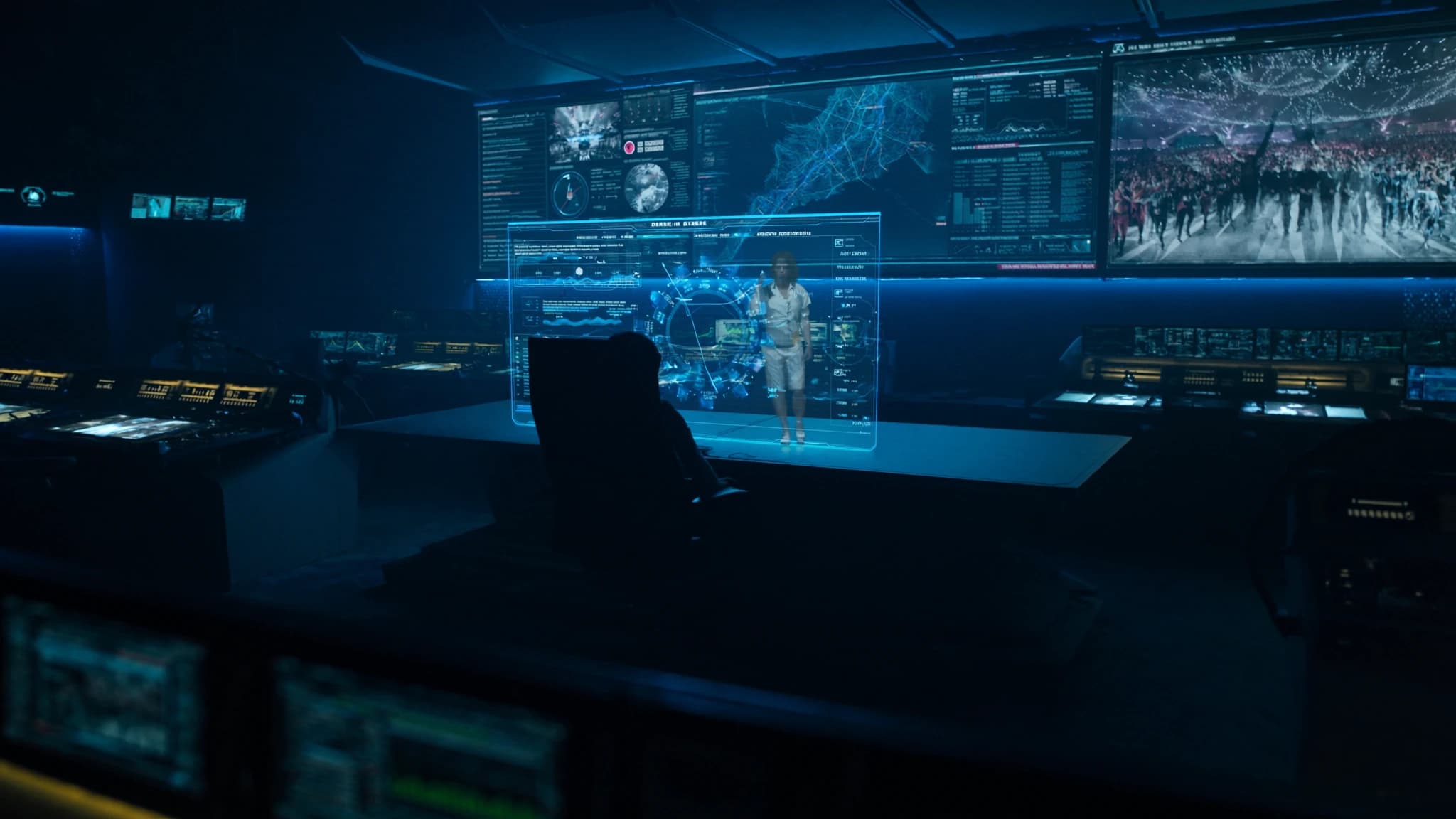
Live event production involves complex, high-stakes environments where safety is paramount. AI is transforming risk assessment by rapidly surfacing hazards, from weather and structural risks to crowd dynamics, while keeping human expertise at the centre for final sign-off. SSOUNDS integrates these intelligent tools to help production teams work smarter, not harder.
Key takeaways
- AI accelerates hazard identification by processing weather, structural, and crowd data faster than manual methods.
- Method statements benefit from AI-generated draft risk lists, but human sign-off remains essential.
- Real-time AI monitoring enables dynamic risk management during live events.
- AI cannot replace local knowledge or professional judgment, it augments them.
- Start with focused AI tools (e.g., weather risk) and scale up as your team gains confidence.
- SSOUNDS integrates AI-assisted modeling for loudspeaker deployment and structural safety.
Why AI for Risk Assessment?
Traditional risk assessments rely on manual checklists, historical data, and human intuition. While these methods are essential, they can miss subtle patterns or fail to keep pace with rapidly changing conditions. AI excels at processing vast datasets, weather forecasts, structural load calculations, crowd flow models, and identifying correlations that might escape even experienced safety officers.
For live events, where every hour of downtime can cost tens of thousands, AI offers a proactive edge. It can flag potential issues before they become problems, allowing teams to allocate resources more efficiently. SSOUNDS’ engineering philosophy embraces this: use technology to augment human judgment, not replace it.
Key AI Applications in Event Safety
Weather risk: AI models can ingest real-time meteorological data, historical storm patterns, and venue microclimates to predict high-wind events, lightning threats, or sudden temperature shifts. These systems can automatically update risk matrices and recommend mitigation actions, like lowering a PA system or securing loose rigging.
Structural integrity: For temporary staging, roof structures, and flown loudspeaker arrays, AI can simulate load distributions and dynamic forces (wind, crowd movement) to detect overstress. It can also cross-reference equipment weight and rigging points against manufacturer specs, flagging any mismatch.
Crowd safety: Computer vision (with privacy safeguards) can monitor crowd density, flow, and pinch points. AI algorithms can predict when a crowd might become unsafe, e.g., at a bottleneck near a stage, and alert security before a crush develops.
Integrating AI with Method Statements
Method statements (RAMS) are the backbone of event safety planning. AI can streamline their creation by auto-populating hazard lists based on venue type, equipment inventory, and historical incident data. For example, an AI tool might note that a particular outdoor venue has a history of high winds in April and suggest adding wind-speed monitoring to the method statement.
Crucially, AI does not sign off, humans do. The system presents a ranked list of risks, suggested controls, and residual risk levels. The safety officer reviews, adjusts, and approves. This keeps accountability where it belongs while saving hours of manual paperwork.
AI for Structural and Rigging Risk
Flying a line array or heavy video wall involves complex calculations. AI can run thousands of load-case simulations in seconds, accounting for wind, seismic activity, and dynamic loads from crowd movement. It can flag if a truss point is overloaded or if a particular rigging configuration exceeds safe working limits.
SSOUNDS’ own engineering team uses AI-assisted modeling to optimize loudspeaker array configurations for coverage and structural safety. The same principles apply to event risk assessment: AI models the physics, humans make the call.
Real-Time Monitoring and Alerts
Once the event is live, AI can monitor sensors, wind anemometers, structural strain gauges, temperature/humidity loggers, and compare readings against risk thresholds. If a parameter exceeds a safe limit, the system sends an alert to the production manager and safety officer, along with recommended actions (e.g., “Lower the PA by 2 meters” or “Evacuate the stage area”).
This closed-loop feedback allows for dynamic risk management. Instead of relying on static paper checklists, the event team can respond to real-time data. SSOUNDS’ DSP and network control systems can integrate with such monitoring platforms, enabling automated system adjustments when safety thresholds are breached.
Human Oversight: The Non-Negotiable
AI is a tool, not a decision-maker. Every AI-generated risk assessment must be reviewed and signed off by a competent person. The technology can surface hazards faster and more comprehensively, but it cannot account for local knowledge, client preferences, or nuanced human factors.
Best practice is to use AI as a first pass, generating a draft risk assessment that the safety team then refines. This hybrid approach reduces human error (e.g., forgetting a common hazard) while preserving professional judgment. SSOUNDS advocates for this balanced model in all its training and documentation.
Getting Started with AI Risk Tools
Event companies can start small: use an AI-powered weather risk dashboard for outdoor shows, or adopt a structural analysis plugin for your CAD software. Many tools are cloud-based and integrate with existing project management platforms.
Key considerations: data privacy (especially for crowd monitoring), algorithm transparency (you should understand why a risk was flagged), and training your team to interpret AI outputs critically. SSOUNDS offers guidance on integrating AI tools into your production workflow as part of its technical support services.
Frequently asked
Can AI fully automate risk assessment for live events?
No. AI can generate drafts and flag risks, but a competent person must review and approve every assessment. Accountability and context require human judgment.
What types of data does AI need for weather risk assessment?
Real-time and historical meteorological data (wind speed, lightning, precipitation), venue microclimate info, and event-specific factors like stage orientation and roof type.
Is AI safe for crowd monitoring?
Yes, when designed with privacy in mind, e.g., using anonymized density maps rather than facial recognition. Always comply with local data protection laws.
How does SSOUNDS use AI in its products?
SSOUNDS uses AI-assisted acoustic modeling and structural simulation to optimize loudspeaker arrays for coverage and safety. These tools inform our engineering but are not a substitute for on-site rigging checks.
What is the cost of implementing AI risk tools?
Costs vary widely, from free weather APIs to enterprise software suites. Start with a low-cost pilot to evaluate ROI before committing to larger systems.
Building or upgrading a system?
SSOUNDS engineers and manufactures professional PA worldwide, from a single room to stadium scale.