Do In-Ceiling Speakers Need a Backbox?
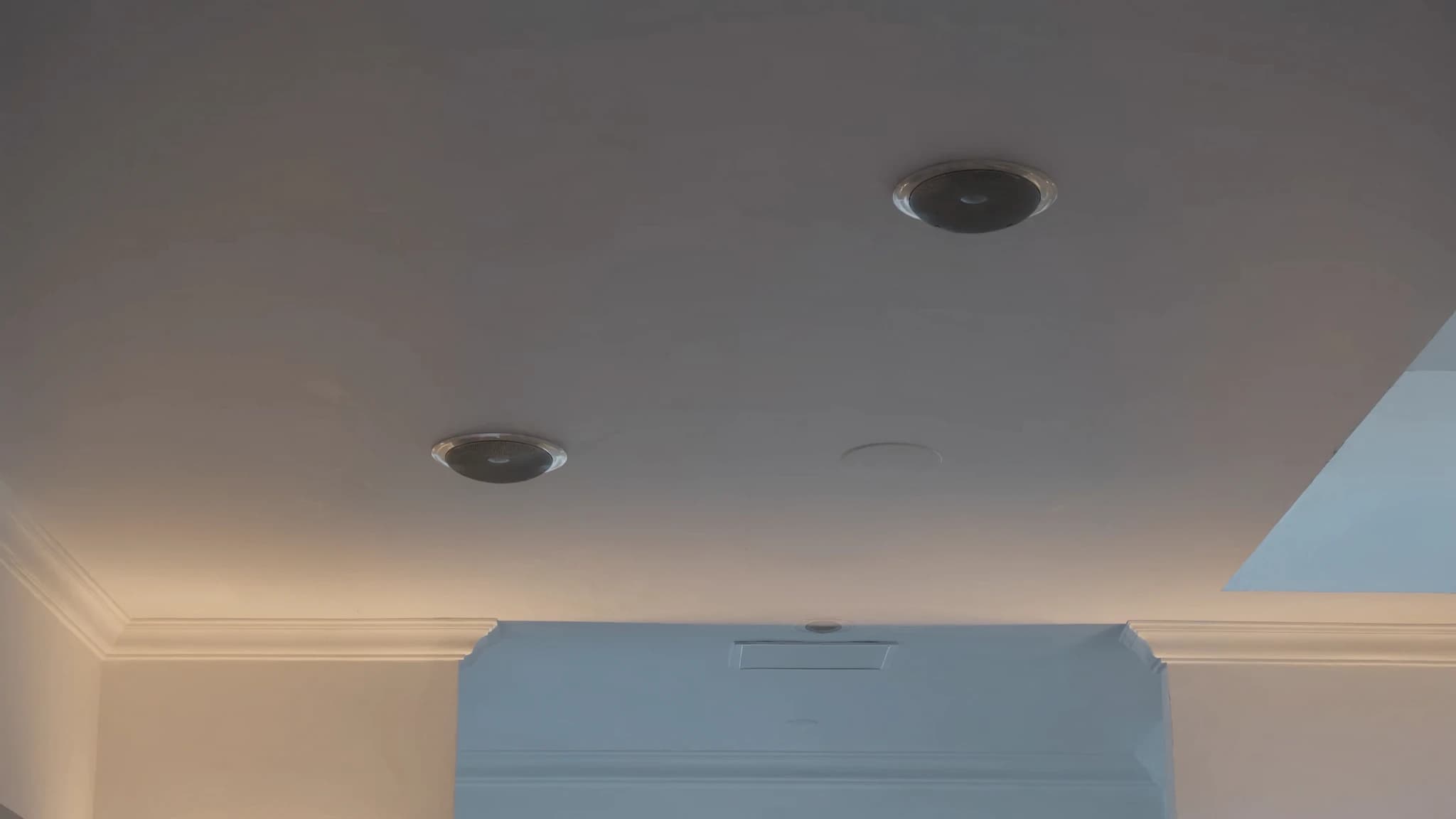
When planning an in-ceiling speaker installation, one of the most common questions is whether a backbox is necessary. The answer depends on your priorities: sound quality, bass performance, fire safety, and acoustic isolation between rooms. This guide explains what a backbox does, when it's required by code, and how it affects your listening experience.
Key takeaways
- A backbox improves sound quality by isolating the rear wave and preventing phase cancellation.
- Bass performance is tighter and more accurate with a properly sized sealed enclosure.
- Fire-rated backboxes are often required by code in multi-story buildings and commercial spaces.
- Acoustic isolation prevents sound from traveling to adjacent rooms, enhancing privacy.
- Even if not mandatory, a backbox is recommended for all in-ceiling installations to ensure consistent performance and warranty compliance.
- Proper installation with acoustic sealant and secure mounting maximizes the benefits.
What Is a Backbox and What Does It Do?
A backbox is an enclosure that mounts behind an in-ceiling speaker, creating a sealed air volume behind the driver. Its primary purpose is to prevent sound from radiating into the ceiling cavity, which can cause muddied bass, interference with adjacent rooms, and reduced overall clarity. Without a backbox, the speaker essentially operates in an infinite baffle, relying on the large ceiling cavity as its enclosure, but this often leads to inconsistent low-frequency response and poor transient control.
Backboxes also provide structural support, protect the speaker from debris and dust, and can include fire-rated materials to meet building codes. In professional installations, they are considered essential for achieving predictable, high-fidelity sound.
Sound Quality: Why a Backbox Matters
The most immediate benefit of a backbox is improved sound quality. In-ceiling speakers without backboxes suffer from uncontrolled rear-wave radiation. The sound waves from the back of the driver travel into the ceiling cavity, reflect off joists and insulation, and re-enter the room through the ceiling material, causing phase cancellation, comb filtering, and a loss of bass definition. This is especially noticeable with music that has strong low-frequency content, like kick drums or bass lines.
A properly designed backbox isolates the rear wave, allowing the speaker to produce tighter, more accurate bass. The sealed volume acts as an acoustic suspension system, damping the driver's motion and extending low-frequency response. For critical listening or home theater applications, a backbox is non-negotiable. SSOUNDS engineers design their in-ceiling systems with integrated backboxes to ensure consistent performance across installations.
Bass Performance: The Role of Enclosure Volume
Bass reproduction is heavily dependent on the enclosure behind the speaker. Without a backbox, the effective volume is the entire ceiling cavity, which is unpredictable and often too large, leading to a loose, boomy bass. A backbox provides a controlled, sealed volume that is matched to the driver's parameters. This yields a lower resonant frequency (Fb), higher power handling, and greater efficiency in the low end.
For example, a typical 8-inch in-ceiling speaker might require a 1-2 cubic foot sealed enclosure for optimal bass. A backbox ensures that volume is consistent, regardless of ceiling construction. In multi-room installations, backboxes also prevent bass from bleeding into adjacent spaces, preserving the intended sound field.
Fire Rating and Building Code Requirements
In many jurisdictions, building codes require in-ceiling speakers in fire-rated ceilings (e.g., between floors in multi-story buildings) to have a fire-rated backbox. This is because a standard speaker cutout creates a hole in the fire-rated barrier, potentially allowing flames and smoke to spread. Fire-rated backboxes are constructed with intumescent materials that expand when exposed to heat, sealing the opening and maintaining the ceiling's fire integrity.
Even if not strictly required by local code, using a fire-rated backbox is a best practice for safety and liability. It also provides peace of mind in commercial installations, hotels, or multi-family dwellings. Always check with your local building authority, but when in doubt, install a backbox.
Acoustic Isolation: Preventing Sound Transfer Between Rooms
One of the most overlooked benefits of a backbox is acoustic isolation. Without it, sound from the speaker travels into the ceiling cavity and can easily be heard in the room above or adjacent spaces. This is a major concern in offices, hotels, and residential installations where privacy matters. A backbox, combined with acoustic sealant and insulation, dramatically reduces sound transmission.
For maximum isolation, choose a backbox that is made of dense material (e.g., MDF or heavy-gauge steel) and includes gaskets for airtight sealing. SSOUNDS backboxes are designed with acoustic damping layers to minimize resonance and leakage. In critical applications, consider adding mass-loaded vinyl or additional insulation around the backbox.
When Is a Backbox Not Required?
There are scenarios where a backbox may be optional. For example, in open-ceiling designs where the ceiling cavity is part of the listening space (e.g., a warehouse or exposed beam loft), a backbox might not be necessary. Similarly, if the speaker is used only for background music or paging, and bass performance is not critical, you might skip it. However, even in these cases, a backbox improves clarity and reduces crosstalk.
Another exception is when using speakers designed for infinite baffle operation, but these are rare in the in-ceiling category. Most reputable manufacturers, including SSOUNDS, recommend backboxes for all installations to ensure warranty compliance and optimal performance.
Installation Tips and Best Practices
When installing a backbox, ensure it is securely attached to the ceiling structure (joists or blocking) to prevent vibration. Use acoustic sealant around all penetrations and at the interface between the backbox and ceiling material. For fire-rated installations, use only UL-listed or equivalent backboxes. Run speaker wire through a grommeted hole to maintain the seal.
If the ceiling cavity is shallow, look for low-profile backboxes designed to fit in tight spaces. SSOUNDS offers a range of backboxes optimized for different ceiling depths and speaker sizes. Always match the backbox volume to the speaker's recommended enclosure volume, using an undersized box can degrade bass response.
Frequently asked
Can I install in-ceiling speakers without a backbox if I don't care about bass?
Yes, but you will still experience reduced clarity and potential sound bleed into other rooms. For background music, it may be acceptable, but for any critical listening or home theater, a backbox is strongly recommended.
Do all in-ceiling speakers come with a backbox?
No, many consumer-grade speakers are sold without backboxes. Professional-grade speakers, like those from SSOUNDS, often include or offer optional backboxes designed for optimal performance.
What is the difference between a fire-rated and non-fire-rated backbox?
A fire-rated backbox is made with intumescent materials that expand in a fire to seal the opening, maintaining the ceiling's fire barrier. Non-rated boxes do not provide this protection and should not be used in fire-rated ceilings.
Can I use a backbox with any in-ceiling speaker?
Most backboxes are designed to fit standard speaker cutout sizes (e.g., 6.5-inch, 8-inch). However, you must ensure the backbox volume matches the speaker's requirements. Using a mismatched box can affect sound quality.
Does a backbox affect speaker sensitivity or power handling?
Yes, a sealed backbox typically increases power handling and reduces distortion at high volumes. Sensitivity may decrease slightly, but the trade-off is better low-frequency control and overall sound quality.
Building or upgrading a system?
SSOUNDS engineers and manufactures professional PA worldwide, from a single room to stadium scale.