Home Cinema Systems: The Complete Guide
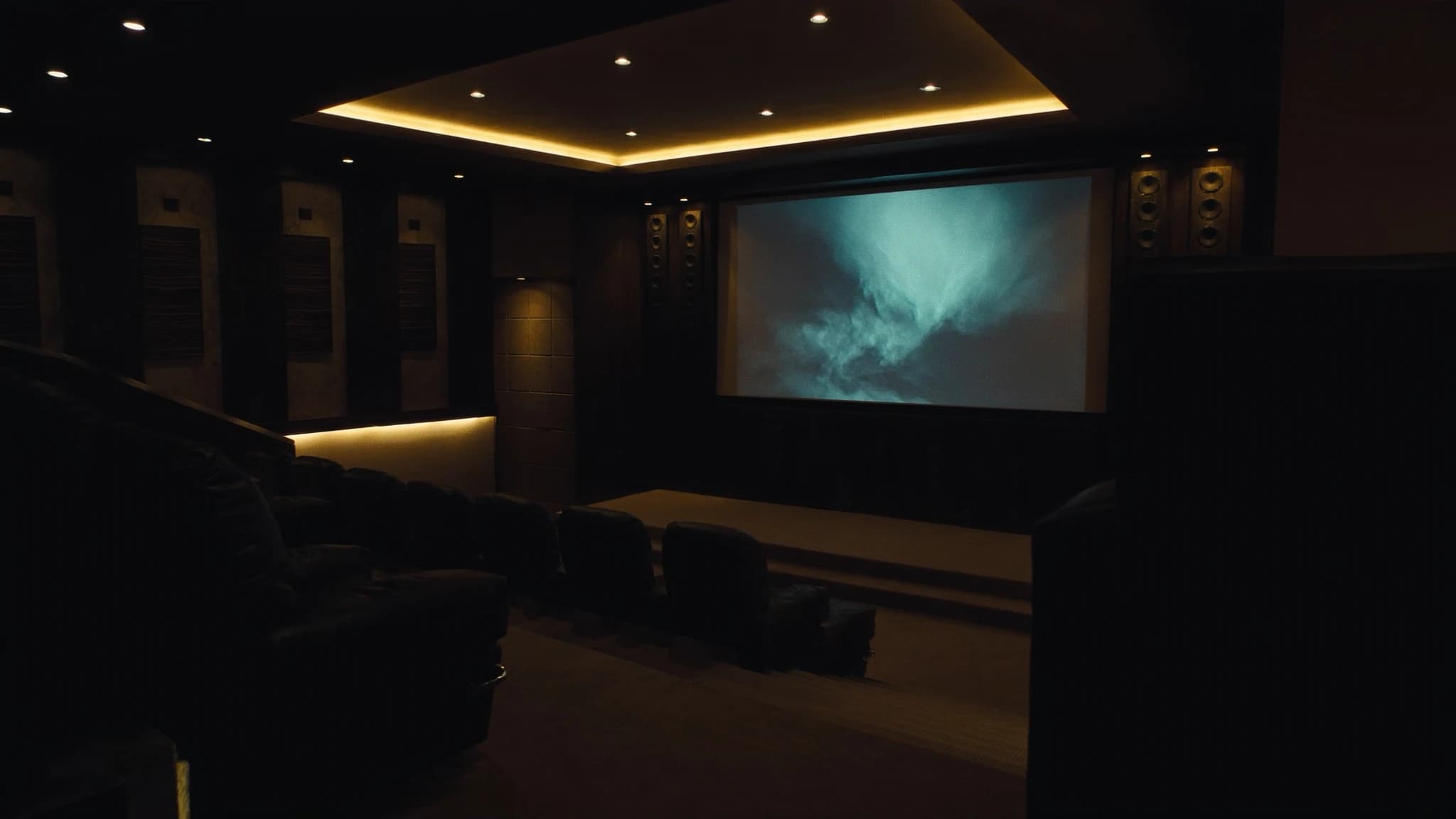
A great home cinema is not just a collection of expensive boxes. It is a carefully designed system where every speaker, amplifier, and acoustic treatment works together to reproduce the director's intent. This guide walks you through the core decisions, from layout and speaker roles to calibration and room acoustics, so you can build a system that genuinely performs.
Key takeaways
- The centre channel is the most critical speaker for dialogue clarity; it must tonally match the left and right speakers.
- Dolby Atmos adds height channels for a three-dimensional soundfield; even a 5.1.2 system can be highly immersive.
- Room correction software in AV receivers is a powerful tool, but it works best when combined with physical acoustic treatment.
- Multiple subwoofers, placed asymmetrically, can smooth out room modes and provide more consistent bass across seats.
- Calibration is not optional: correct levels, delays, and EQ are essential for a cohesive, believable soundstage.
Understanding Channel Layouts: 5.1, 7.1, and Dolby Atmos
The numbers in 5.1 and 7.1 refer to discrete channels: five or seven main speakers plus one subwoofer (the .1). In a 5.1 layout, you have left, centre, right, left surround, and right surround. A 7.1 layout adds two rear surround channels, creating a more enveloping field behind the listener. Both are built on the principle of discrete, full-range channels, though in practice surround speakers are often bass-managed.
Dolby Atmos and DTS:X take a different approach. Instead of channels, they use object-based audio, where sounds are placed in a three-dimensional space with metadata. This allows for overhead speakers (or up-firing modules) to create height effects. A typical Atmos layout is 5.1.2 (two overheads) or 5.1.4 (four overheads), and you can go further with 7.1.4 or 9.1.6. The key is that Atmos adds a vertical dimension, making rain, aircraft, and ambient effects feel truly above you.
Choosing a layout depends on room size, budget, and how far you want to go. For small to medium rooms, a well-executed 5.1.2 system often outperforms a poorly placed 7.1.4. The goal is seamless panning and a believable bubble of sound, not just more speakers.
Speaker Roles: What Each Channel Does
The centre channel is the most important speaker in any home cinema. It anchors dialogue and most on-screen action to the picture, so clarity and tonal consistency with the left and right speakers are critical. A dedicated centre with a horizontal array or a coaxial design helps keep dialogue locked to the screen.
Left and right speakers handle music, effects, and the width of the soundstage. They should be placed at ear height, angled slightly toward the listening position, and form an equilateral triangle with the centre. Towers or high-quality bookshelf speakers on stands both work, but they must be capable of clean, dynamic output.
Surround speakers create immersion. In a 5.1 or 7.1 system, they are usually placed to the sides and slightly behind the listener, at or just above ear height. Bipole or dipole designs can diffuse the sound for a more enveloping effect, while direct-radiating speakers offer more precise localisation. For Atmos, overhead or height speakers should be placed above the listening area, either in-ceiling or as up-firing modules on top of the front speakers.
Subwoofers handle the low-frequency effects (LFE) channel and bass management for all speakers. One subwoofer can work well in smaller rooms, but two or four subs placed strategically can smooth out room modes and deliver more even bass across multiple seats. The subwoofer is not just for explosions; it underpins the entire foundation of the soundtrack.
AV Receivers and Processors: The Brain of the System
The AV receiver (AVR) or preamp/processor is the control centre. It decodes the audio format, applies room correction, manages bass, and amplifies the signal to your speakers. Brands like Denon, Yamaha, and Marantz are well known in this space, offering a range of models from entry-level to high-end. When choosing, look for the features you actually need: number of channels, HDMI version, support for the latest immersive formats, and room correction software.
Room correction is one of the most powerful tools in a modern AVR. Systems like Audyssey, Dirac Live, and Yamaha's YPAO measure your room's response and adjust delays, levels, and EQ to compensate for imperfections. This is especially important for bass, where room modes can create boomy or null spots. A good calibration can transform a mediocre setup into a great one.
For the most demanding installations, a separate preamp/processor and power amplifiers offer more headroom, better channel separation, and upgrade flexibility. This is common in high-end home cinemas where every component is chosen for its sonic purity. Whether you choose an integrated receiver or separates, make sure the amplifier section has enough clean power for your speakers and room size.
Subwoofers and Bass Management
Bass is the foundation of home cinema impact, but it is also the hardest thing to get right. A single subwoofer can sound uneven because of room modes, those peaks and dips in frequency response caused by standing waves. Adding a second subwoofer, placed asymmetrically, can cancel out some of those modes and provide more consistent bass across multiple seats.
Bass management is the process of redirecting low frequencies from your main speakers to the subwoofer. This is typically done in the AVR, where you set a crossover frequency (often 80 Hz) and designate speakers as small or large. Even if your main speakers can reproduce deep bass, redirecting it to the subwoofer can reduce distortion and increase headroom. The goal is a smooth transition between the sub and the mains, so you do not hear where one ends and the other begins.
For the ultimate in bass performance, some enthusiasts use multiple subwoofers with a dedicated bass management processor or a miniDSP to fine-tune delay, EQ, and level. This level of control is often found in high-end installations, but even a basic two-sub setup with careful placement can yield excellent results.
Room Acoustics: The Invisible Component
The room itself is as important as any speaker. Hard, reflective surfaces create echoes and blur dialogue, while excessive absorption can make the sound dull and lifeless. The goal is a balanced acoustic environment with controlled reflections and a reverberation time that suits cinema, typically around 0.3 to 0.5 seconds.
Start with speaker placement. Follow the manufacturer's recommendations and use the golden ratio or similar guidelines to position your listening seat. Avoid placing speakers too close to walls or corners, which can boost bass and muddy the midrange. If possible, treat the first reflection points on the side walls, ceiling, and floor with absorptive panels. Bass traps in corners help control low-frequency buildup.
Diffusers can be used on the rear wall to scatter sound and create a more natural sense of space. In many home cinemas, a combination of absorption and diffusion is used to achieve a lively but controlled sound. Remember that acoustic treatment does not have to be expensive; DIY panels with mineral wool or fiberglass are effective if built safely.
Calibration: Making It All Work Together
Calibration is the final and most crucial step. Even with perfect equipment and room treatment, without proper calibration you will not hear the system at its best. Start with the basics: set all speakers to the same level using a calibrated microphone or SPL meter, and verify that distances are correct so that sounds arrive at the listening position simultaneously.
Use the AVR's built-in room correction as a starting point, but do not be afraid to adjust afterwards. Many enthusiasts prefer to run the auto-calibration, then manually tweak the target curve or bass level to taste. For advanced users, software like REW (Room EQ Wizard) with a measurement microphone can provide detailed insights into your system's response, allowing you to fine-tune with precision.
Finally, calibrate your video display as well. A well-calibrated picture enhances the overall experience and ensures that the audio and video are in harmony. Many AVRs and projectors include basic calibration patterns, but a professional calibrator can unlock the full potential of your display.
Bringing It All Together: The SSOUNDS Approach
At SSOUNDS, we approach home cinema with the same engineering rigour we apply to professional touring systems. Our loudspeakers are designed for accurate, dynamic reproduction, and our subwoofers deliver the deep, controlled bass that brings soundtracks to life. We also understand that every room is different, so we provide guidance on layout, acoustics, and calibration to help you get the best from your system.
Whether you are building a dedicated cinema room or upgrading a living room setup, the principles remain the same: choose the right layout for your space, select speakers that match your goals, integrate them with a capable receiver or processor, and take the time to calibrate and treat your room. With careful planning, you can create an immersive experience that rivals a commercial cinema, all from the comfort of your home.
Frequently asked
How many speakers do I need for a home cinema?
A basic 5.1 system uses five speakers plus a subwoofer. For a more immersive experience, 7.1 adds two rear surrounds, and Dolby Atmos adds overhead or height speakers. The right number depends on your room size and budget, but a well-set-up 5.1.2 system is often better than a poorly executed 7.1.4.
Can I use my existing speakers with a new AV receiver?
Yes, as long as the speakers are compatible with the receiver's power output and impedance. However, for the best results, all speakers in the bed layer (left, centre, right, surrounds) should be timbre-matched, ideally from the same series. If you are mixing brands, pay extra attention to the centre channel, as mismatches are most audible there.
What is the best crossover frequency for my speakers?
A common starting point is 80 Hz, but it depends on the capabilities of your speakers. If your main speakers have small woofers, a higher crossover (e.g., 100 Hz) may reduce distortion. If they are large towers, you might set them to large and let them run full-range, though redirecting bass to the subwoofer often yields cleaner results. Use calibration to find what works best in your room.
Do I need acoustic treatment in my home cinema?
Almost always, yes. Even basic treatment like thick rugs, curtains, and bookshelves can help. Purpose-built absorptive panels at first reflection points and bass traps in corners will make a significant difference in clarity and bass evenness. The goal is to control reflections without making the room sound dead.
How do I calibrate my home cinema system?
Start with your AV receiver's auto-calibration, then verify levels and distances with an SPL meter and tape measure. For advanced tuning, use measurement software like REW with a calibrated microphone to analyse the response and adjust EQ, delays, and bass management. Many professionals offer calibration services, which can be worthwhile for high-end systems.
Building or upgrading a system?
SSOUNDS engineers and manufactures professional PA worldwide, from a single room to stadium scale.