Stadium and Arena Sound Design Fundamentals
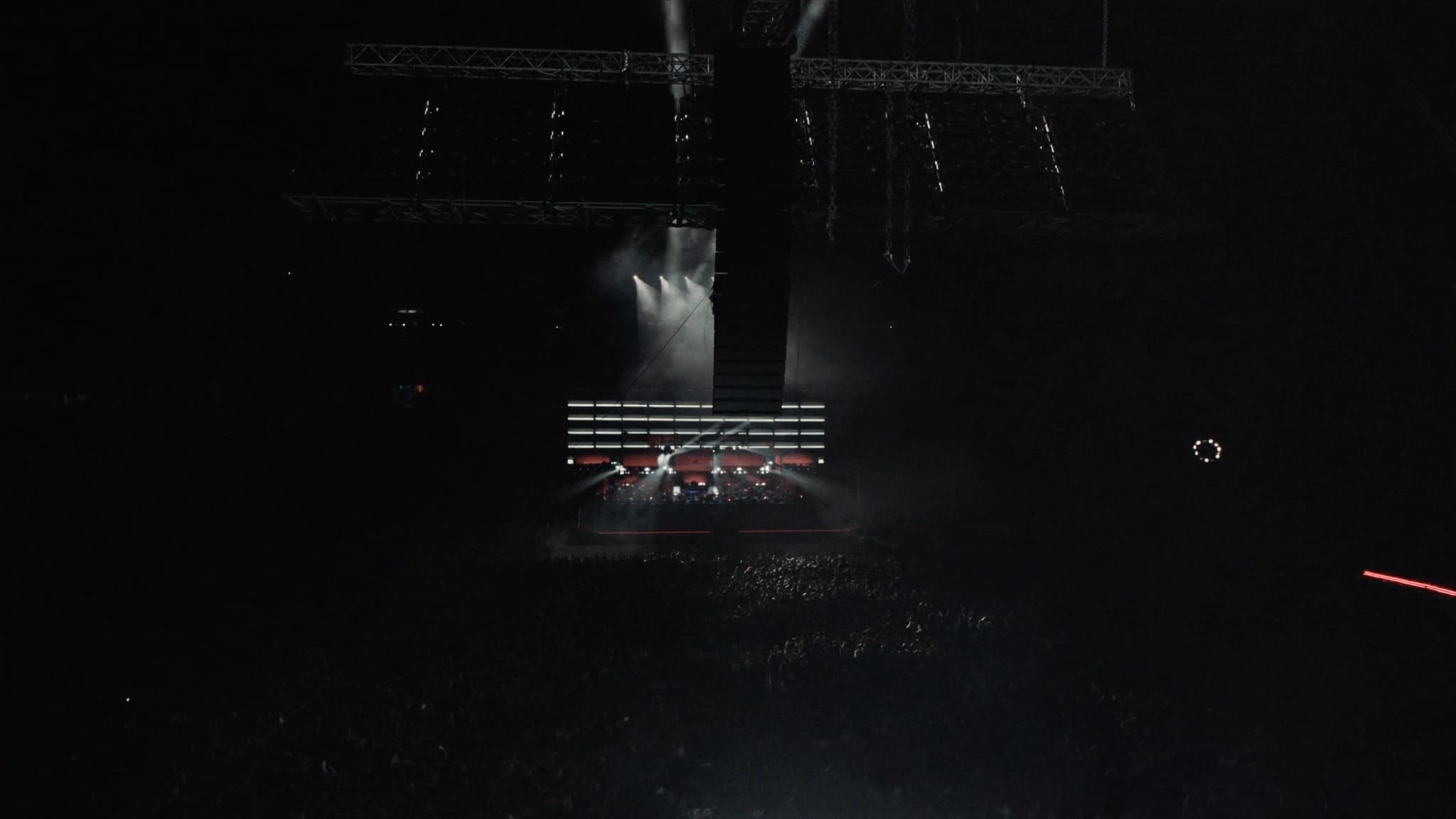
Designing sound for stadiums and arenas is one of the most demanding challenges in professional audio. Unlike indoor theaters or clubs, these massive venues must deliver clear, intelligible audio to tens of thousands of listeners spread across vast distances, often in acoustically hostile environments. The key lies in long-throw line arrays, precise delay ring deployment, and rigorous attention to coverage and SPL consistency. At SSOUNDS, we engineer systems that meet these challenges head-on, combining advanced waveguide technology, high-power transducers, and intelligent DSP to ensure every seat, from the front row to the upper deck, experiences the same sonic impact. This guide explores the fundamental principles that define world-class stadium sound design.
Key takeaways
- Long-throw line arrays use cylindrical wavefront propagation to maintain SPL over distance, with only 3 dB loss per doubling of distance.
- Delay rings extend coverage by time-aligning secondary loudspeaker clusters to the main array, preventing echoes and ensuring seamless transitions.
- Intelligibility (STI > 0.7) requires high directivity, FIR-based DSP, and high-sensitivity drivers to overcome reverberation and background noise.
- Consistent coverage (±3 dB) demands precise splay angles, cardioid subwoofer configurations, and venue-specific EQ compensation.
- Networked zoning with Dante/AES67 allows a single system to adapt for sports, concerts, and conferences via recallable presets.
- Structural safety and environmental resilience (IP55, high-temperature operation) are non-negotiable for permanent stadium installations.
The Physics of Long-Throw Line Arrays
Line arrays are the backbone of modern stadium sound. Unlike traditional point-source speakers that lose level rapidly with distance, line arrays use constructive interference between multiple vertically arranged drivers to create a cylindrical wavefront. This reduces the inverse-square law loss to 3 dB per doubling of distance (instead of 6 dB), allowing sound to travel much farther with consistent coverage. For a 70,000-seat stadium, this means the upper tiers can receive levels comparable to the field level.
However, not all line arrays are created equal. True long-throw capability requires large-format drivers (typically 12- or 15-inch woofers) in a dedicated low-mid enclosure, coupled with high-frequency waveguides that maintain pattern control down to the crossover point. SSOUNDS line arrays employ proprietary phase plugs and isophasic manifolds to ensure coherent wavefront summation, minimizing lobing and comb filtering. The result is a system that maintains intelligibility even at distances exceeding 100 meters.
Delay Rings: Extending Coverage Without Compromise
No single line array can cover an entire stadium without unacceptable level variation. That’s where delay rings come in. A delay ring is a secondary set of loudspeakers, typically smaller line arrays or point-source boxes, positioned further back in the venue (e.g., under balconies or at the rear of upper decks) and time-aligned to the main system. By introducing a digital delay that matches the acoustic arrival time from the main array, the delay ring reinforces the sound without creating echoes or phase cancellation.
Proper delay ring design requires careful measurement and modeling. The delay time must be calculated for each ring based on its physical distance from the main array, and the system must be zoned so that only listeners in the delay ring’s coverage area hear it. SSOUNDS systems integrate with advanced prediction software (like EASE Focus or proprietary tools) to optimize delay ring placement and ensure seamless transition between zones. In practice, a well-designed delay ring can extend coverage by 30–50 meters while maintaining full intelligibility.
Achieving Intelligibility at Scale
Intelligibility, the ability for listeners to understand speech and lyrics, is the ultimate metric of a stadium sound system. It is quantified by the Speech Transmission Index (STI), with values above 0.5 considered acceptable and above 0.7 excellent. In large venues, reverberation, background noise, and comb filtering all degrade STI. To combat this, designers must prioritize direct-to-reverberant ratio by using highly directional loudspeakers and minimizing overlap between adjacent arrays.
SSOUNDS engineers tackle intelligibility through three key strategies: First, our line arrays feature narrow vertical dispersion (as low as 5 degrees) to reduce unwanted reflections from the ceiling and upper walls. Second, we employ FIR-based DSP to flatten phase response and eliminate time-domain smearing. Third, we specify high-sensitivity drivers (typically 100 dB SPL 1W/1m or higher) to achieve target levels without excessive amplifier power, reducing thermal compression. In recent deployments, SSOUNDS systems have achieved STI values above 0.7 in venues exceeding 50,000 seats.
SPL Coverage and Consistency
A common mistake in stadium design is focusing only on maximum SPL. While peak levels of 110–120 dB are often required for concerts, consistency across the audience area is equally important. A well-tuned system should have no more than ±3 dB variation from the average level across all seats. This requires careful aiming of each array element, proper splay angles between cabinets, and strategic use of subwoofer arrays to manage low-frequency uniformity.
SSOUNDS line arrays feature adjustable inter-cabinet angles in 0.5-degree increments, allowing precise shaping of the vertical coverage pattern. For subwoofers, we recommend cardioid or end-fire configurations to reduce rearward radiation and improve low-frequency consistency in the stands. Our DSP presets include venue-specific EQ curves that compensate for boundary loading and air absorption at high frequencies, ensuring that the mix sounds the same in row 1 and row 100.
System Zoning and Networked Control
Modern stadiums often host multiple event types, sports, concerts, conferences, each requiring different coverage zones. A flexible sound system must allow independent control of main arrays, delay rings, under-balcony fills, and front-fills. SSOUNDS systems are built on a Dante/AES67 network backbone, with all amplifiers and DSP units addressable via a single control interface. This enables sound engineers to recall show-specific presets that adjust delay times, EQ, and level for each zone.
For example, during a football match, the system might prioritize speech intelligibility for announcements, reducing low-frequency content and narrowing coverage to avoid exciting reverberation. For a concert, the same system can switch to a full-range, high-SPL preset with subwoofer arrays engaged. This zoning capability is critical for maximizing return on investment, as a single system can serve multiple purposes without compromising performance.
Structural and Environmental Considerations
Stadium installations present unique mechanical challenges. Line arrays weighing several tons must be flown from roof trusses that may flex under load. SSOUNDS rigging systems are designed with safety factors exceeding 10:1, using aircraft-grade aluminum and redundant attachment points. All components are rated for outdoor use (IP55 or higher) to withstand rain, dust, and temperature extremes.
Additionally, wind loading can affect sound propagation in open-air stadiums. While this is beyond the control of the sound system, designers can mitigate by using weather-resistant enclosures and ensuring that all electronic components have proper ventilation. SSOUNDS amplifiers feature active thermal management and can operate in ambient temperatures up to 50°C without derating.
Case Study: SSOUNDS in a 60,000-Seat Arena
To illustrate these principles, consider a recent SSOUNDS installation in a 60,000-seat multipurpose arena. The main system consisted of two hangs of 24 large-format line array cabinets each, covering the lower and middle tiers. Four delay rings, each with 12 medium-format cabinets, were positioned under the upper deck overhangs, time-aligned to within 1 millisecond. Sixteen cardioid subwoofer arrays were distributed around the field perimeter.
The result was a system that delivered 110 dB SPL average with ±2 dB variation across all seats, and an STI of 0.72 in the furthest seats. The client reported zero complaints about audio quality from any seating section, and the system has since been used for international concerts, political rallies, and esports events. This success underscores the importance of rigorous design, quality components, and expert tuning.
Frequently asked
What is the difference between a line array and a point-source speaker for stadiums?
Line arrays create a cylindrical wavefront that decays at 3 dB per doubling of distance, making them ideal for long throws. Point-source speakers produce a spherical wavefront with 6 dB loss per doubling, limiting their reach. For stadiums, line arrays are essential for consistent coverage from front to back.
How many delay rings does a typical stadium need?
It depends on the venue geometry. For a 60,000-seat stadium with multiple tiers, 3–5 delay rings are common. Each ring covers a specific zone (e.g., upper deck, corners) and is time-aligned to the main array. SSOUNDS uses predictive modeling to determine optimal placement.
Can SSOUNDS systems be used for both speech and music?
Absolutely. SSOUNDS DSP includes presets optimized for speech (narrow bandwidth, high intelligibility) and music (full-range, high SPL). The networked control allows instant switching between modes, making the system suitable for sports, concerts, and events.
What is the typical SPL requirement for a stadium concert?
Most professional concerts target 110–115 dB SPL average with peaks up to 120 dB. SSOUNDS line arrays are designed to achieve these levels with headroom, even in the furthest seats, while maintaining low distortion.
How do you ensure safety when flying heavy line arrays?
SSOUNDS rigging uses aircraft-grade aluminum with safety factors exceeding 10:1. All components are load-tested and certified. Installation must follow manufacturer guidelines and local safety codes, often requiring structural engineering review of the venue roof.
Building or upgrading a system?
SSOUNDS engineers and manufactures professional PA worldwide, from a single room to stadium scale.