The Best Ceiling Speakers: A Complete Buyer's Guide
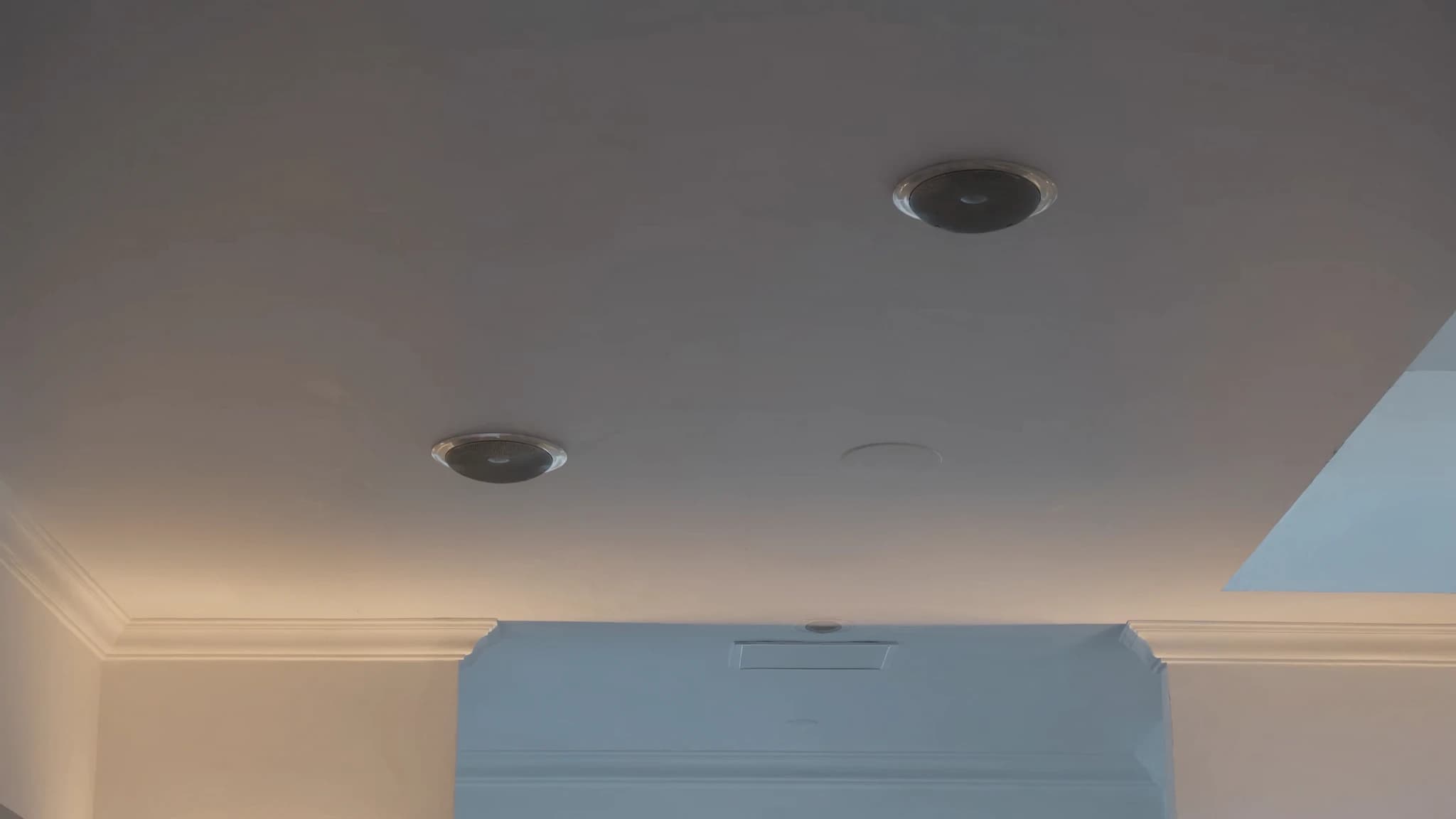
Choosing the right ceiling speaker for your commercial installation can be the difference between clear, intelligible audio and a muddled mess. This guide cuts through the jargon, in-ceiling vs surface-mount, 70/100V vs low-impedance, coverage spacing, tap settings, and fire-rated options, to help you specify a system that performs. SSOUNDS commercial ceiling range offers premium-grade components and engineering for installations that demand reliability and sonic excellence.
Key takeaways
- In-ceiling speakers offer discreet integration; surface-mount is easier for retrofits.
- 70V/100V systems are best for long runs and many speakers; low-impedance for high-fidelity zones.
- Space speakers 1.5–2x ceiling height for even coverage.
- Tap settings should sum to 80% of amplifier power for headroom.
- Fire-rated EN 54-24 speakers are mandatory in many commercial voice alarm systems.
- SSOUNDS commercial ceiling range provides premium components, flexible tap settings, and fire-rated options.
In-Ceiling vs Surface-Mount: Which Fits Your Space?
In-ceiling speakers are flush-mounted into a ceiling tile or drywall, providing a discreet, low-profile solution ideal for offices, retail spaces, and restaurants where aesthetics matter. They blend into the architecture and save floor space. Surface-mount speakers, on the other hand, are attached to the ceiling or walls and are often used in warehouses, gyms, or industrial settings where ceiling access is limited or acoustic treatment is needed.
For commercial installations, in-ceiling speakers are typically preferred for their clean look and ability to distribute sound evenly across a zone. However, surface-mount options can be easier to install and adjust after the fact. SSOUNDS offers both form factors, with our in-ceiling models featuring paintable grilles and low-profile bezels for seamless integration.
70V/100V vs Low-Impedance Systems: Understanding the Difference
In commercial audio, the choice between constant-voltage (70V or 100V) and low-impedance (typically 8Ω) systems is critical. Constant-voltage systems allow you to run long cable runs with minimal power loss and easily parallel multiple speakers, each with its own tap setting. This makes them ideal for large-scale distributed audio in offices, hotels, and retail chains.
Low-impedance systems are better suited for smaller zones or high-fidelity applications like boardrooms or bars where you need full-range, high-SPL performance. SSOUNDS ceiling speakers are available in both 70V/100V and low-impedance versions, with multi-tap transformers that let you adjust power per speaker, typically 1.5W, 3W, 6W, 12W, and 24W taps, plus an 8Ω bypass for low-impedance operation.
Coverage and Spacing: Getting Consistent Sound
For paging and background music, a 100° conical coverage is common. For foreground music or speech reinforcement, narrower coverage may be needed to avoid reflections. Always consider the room's acoustics, hard surfaces like glass and tile can cause comb filtering if speakers are too close.
Tap Settings: How to Choose the Right Wattage
Tap settings on a 70V/100V speaker determine how much power it draws from the amplifier. The total tap wattage of all speakers must not exceed the amplifier's rated power. For background music, 1.5W to 6W per speaker is typical; for paging, 6W to 12W; for foreground music or higher SPL, 12W to 24W.
To calculate, sum the tap settings of all speakers and ensure it's 80% or less of the amplifier's output for headroom. SSOUNDS ceiling speakers feature a rotary tap switch on the front baffle for easy adjustment during installation. Our technical support team can help you calculate the optimal tap settings for your project.
Fire-Rated and EN 54 Compliance: Safety First
In many commercial buildings, ceiling speakers must meet fire safety standards to maintain the integrity of fire-rated ceilings. Fire-rated speakers are designed to prevent the spread of flames and smoke through the ceiling cavity. In Europe, EN 54-24 is the standard for loudspeakers for voice alarm systems, requiring specific performance and reliability criteria.
SSOUNDS offers a range of fire-rated ceiling speakers with intumescent seals and back cans that meet EN 54-24 requirements. These models are essential for hotels, hospitals, and public buildings where life safety is paramount. Always check local building codes, our team can advise on the right fire-rated solution for your region.
Where Ceiling Speakers Fit in a Commercial Install
Ceiling speakers are the backbone of distributed audio in commercial environments. They excel in open-plan offices, retail stores, restaurants, conference rooms, and hospitality spaces. They are also used in voice evacuation systems, where clear speech intelligibility is critical.
For large venues like airports or shopping malls, ceiling speakers are often combined with pendant-mounted or surface-mount speakers for zones with high ceilings. SSOUNDS commercial ceiling range includes models with dual-cone or coaxial drivers for full-range response, and our subwoofers can be added for low-end extension in music-heavy applications.
Practical Selection Criteria for Your Next Project
Start by defining the application: background music, paging, or foreground music. Determine the ceiling height, room dimensions, and acoustic environment. Choose between 70V/100V and low-impedance based on cable run length and number of speakers. Select tap settings based on desired SPL and amplifier power.
Consider aesthetics, paintable grilles and low-profile designs. For safety, check fire-rating requirements. Finally, look for quality drivers and robust construction. SSOUNDS ceiling speakers use high-excursion woofers and silk-dome tweeters for clarity, with ABS or steel back cans for durability. Our range includes models with 6.5-inch and 8-inch woofers, covering most commercial needs.
Frequently asked
What is the difference between 70V and 100V systems?
Both are constant-voltage systems, but 100V is more common in Europe and allows slightly longer cable runs or more speakers per amplifier. 70V is typical in North America. The principle is the same: speakers have taps that determine power draw.
Can I mix 70V and low-impedance speakers on the same amplifier?
No, you cannot mix them on the same amplifier channel. You need a dedicated 70V/100V amplifier for constant-voltage speakers, or a low-impedance amplifier for 8Ω speakers. Some amplifiers offer switchable outputs.
How do I calculate the number of ceiling speakers needed?
Divide the room length and width by the spacing distance (1.5–2x ceiling height). For example, a 40x30 ft room with a 10 ft ceiling: speakers spaced 15–20 ft apart would need about 4–6 speakers. Use acoustic modeling software for precision.
Are SSOUNDS ceiling speakers EN 54 certified?
Yes, SSOUNDS offers a range of ceiling speakers that meet EN 54-24 standards for voice alarm systems. Contact our sales team for specific model certifications.
What tap setting should I use for background music?
For background music in an office or retail space, 1.5W to 6W per speaker is typical. For paging, 6W to 12W. Adjust based on ambient noise levels and desired SPL.
Building or upgrading a system?
SSOUNDS engineers and manufactures professional PA worldwide, from a single room to stadium scale.