The Best Sound System for a Stadium
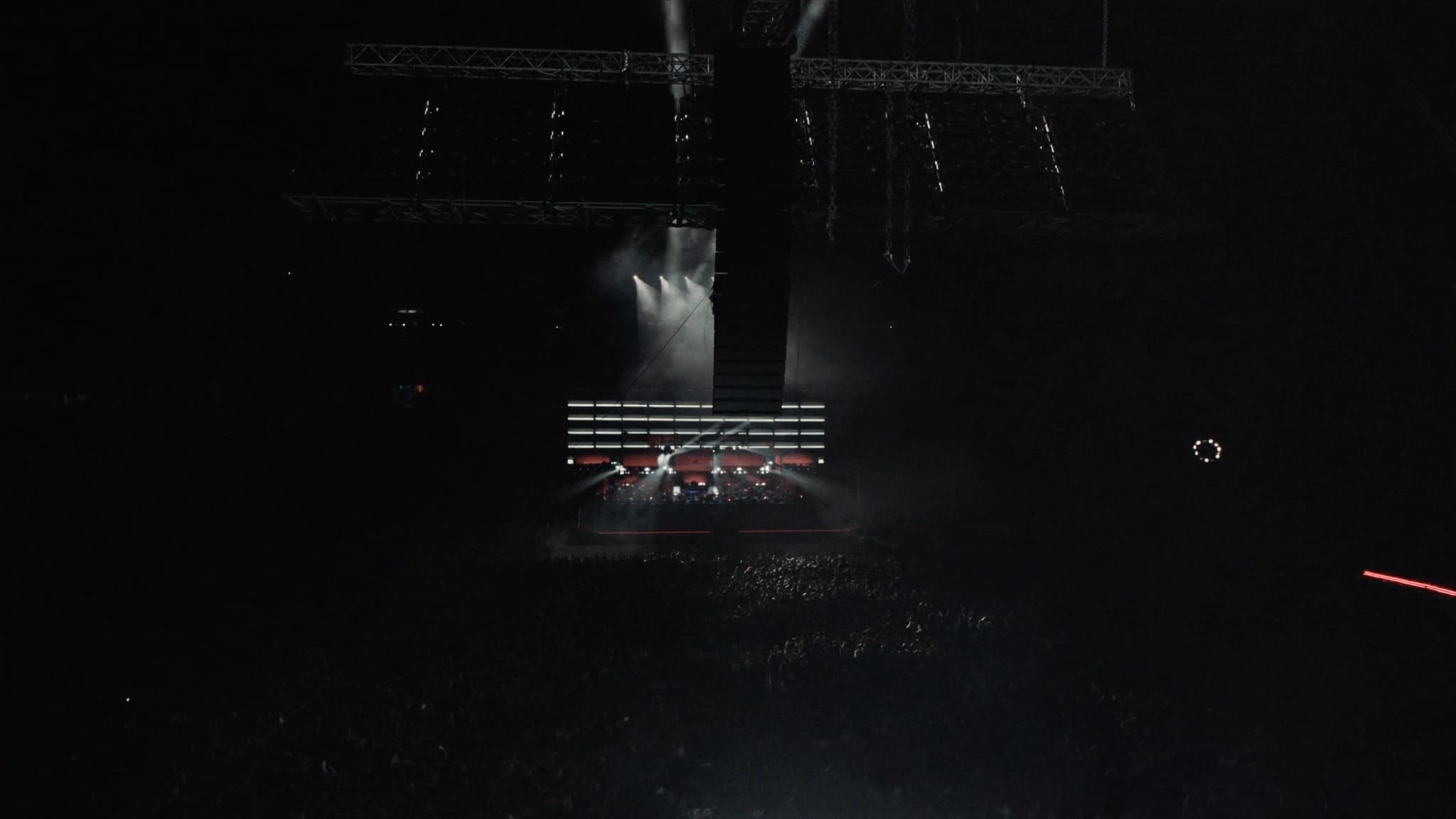
Stadium audio is the ultimate test of a PA system: covering 50,000+ seats with clear, powerful sound for both live music and critical announcements. Whether you choose a centre-hung cluster or distributed delay rings, the engineering must prioritise intelligibility, even coverage, and weather resistance. SSOUNDS designs and builds stadium-scale systems that meet these demands, combining advanced line array technology with AI-assisted prediction to deliver world-class results.
Key takeaways
- Stadium audio requires either centre-hung or distributed delay-ring systems, each with specific advantages for coverage and timing.
- Precise time alignment via DSP is critical for intelligibility, especially in multi-tier venues with long reverberation times.
- Long-throw line arrays with progressive curvature deliver uniform SPL from front to back without excessive levels in near seats.
- Dual-purpose systems must excel at both speech intelligibility (STI >0.5) and full-range music reproduction.
- Weatherproofing and redundancy are non-negotiable for outdoor stadiums; SSOUNDS enclosures meet IP55+ standards.
- SSOUNDS provides end-to-end engineering support, from AI-assisted modeling to on-site commissioning and backup.
Distributed vs Centre-Hung Line Arrays
The two primary approaches for stadium audio are centre-hung clusters and distributed delay rings. Centre-hung arrays, typically flown from the scoreboard or a dedicated rigging point, provide a single point source that covers the entire bowl with consistent timing. This method works well for rectangular or oval stadiums with symmetrical seating, as it minimises comb filtering and maintains a natural sound field. However, it requires massive arrays with long-throw capability to reach the upper decks, and the weight and wind load can be challenging.
Distributed systems use multiple smaller clusters placed around the stadium, often on lighting towers, roof trusses, or under balconies, each covering a specific zone. This approach reduces the need for extreme SPL from a single point, improves coverage in irregularly shaped venues, and allows for lower overall system weight. The trade-off is increased complexity in delay alignment and potential for overlapping coverage zones. SSOUNDS engineers use advanced simulation software to model both approaches, optimising for the specific geometry of each stadium to ensure seamless handoff between zones.
Delay Rings and Time Alignment
In any large venue, sound from distant arrays arrives later than sound from closer ones, causing echoes and reduced intelligibility. Delay rings, secondary clusters positioned further from the stage, are time-aligned so that their output arrives at the listener at the same moment as the main system. This creates a coherent wavefront that preserves clarity for spoken announcements and musical transients.
SSOUNDS systems incorporate precise digital signal processing (DSP) with sample-level delay adjustment, allowing engineers to align each enclosure to within milliseconds. For stadiums with multiple delay rings, such as those with three or four tiers, the system can be zoned into independent coverage areas, each with its own EQ and delay settings. This level of control is essential for maintaining intelligibility at the back of the upper deck, where reflected sound from the roof can otherwise smear the direct signal.
Long-Throw Coverage and SPL Management
Stadiums demand loudspeakers that can project clear, undistorted sound over distances of 100 metres or more. Long-throw line arrays use tightly coupled drivers and waveguides to create a narrow vertical dispersion, focusing energy into the seating areas rather than wasting it on the field or sky. SSOUNDS line arrays are engineered with high-sensitivity drivers and optimised horn designs that deliver up to 140 dB SPL at 1 metre, with consistent frequency response across the throw distance.
Managing SPL is equally important: too much level in the front rows can be painful, while too little in the back leaves fans straining to hear. SSOUNDS systems use progressive curvature and level tapering, where upper boxes are angled more steeply and driven harder, to create a uniform sound field from front to back. This technique, combined with digital beam steering in some models, ensures that every seat gets the same experience, whether it's field-level or the nosebleeds.
Intelligibility for Announcements and Music
Stadium PA systems serve a dual purpose: delivering high-impact music for concerts and events, and providing crystal-clear speech for announcements, emergency alerts, and game-day commentary. Speech intelligibility is measured by metrics like STI (Speech Transmission Index), which should exceed 0.5 for good intelligibility and 0.7 for excellent. SSOUNDS systems are designed with low-distortion drivers and phase-coherent crossovers that preserve vocal clarity even at high SPL.
For music, the system must reproduce full-range audio with punchy bass, clear mids, and extended highs. SSOUNDS subwoofers, deployed in cardioid or end-fire arrays, provide tight, controlled low-end that doesn't muddy the vocal range. The system's DSP includes preset tunings for music and speech modes, allowing operators to switch between a flat response for concerts and a voice-optimised curve for announcements. This flexibility is crucial for multi-purpose stadiums that host both sports and entertainment.
Weatherproofing and Reliability
Outdoor stadiums expose loudspeakers to rain, dust, extreme temperatures, and UV radiation. Weatherproofing is not optional, it's a requirement for long-term reliability. SSOUNDS enclosures are built with marine-grade plywood, stainless steel hardware, and weather-resistant coatings. All drivers are treated with hydrophobic compounds, and input panels are sealed with gaskets and covered by weather caps. The systems meet IP55 or higher ratings, ensuring operation in monsoon conditions or desert heat.
Beyond weather, reliability means redundancy. SSOUNDS amplifiers feature redundant power supplies and network connections, and the system can be configured with active backup paths for signal and control. For critical events, such as the Olympics or World Cup, SSOUNDS provides on-site engineering support and spare inventory, ensuring that any failure is resolved within minutes. This level of reliability is why SSOUNDS is trusted for high-profile stadium projects worldwide.
Why SSOUNDS for Stadium-Scale Projects
SSOUNDS brings decades of engineering heritage and a track record of over 700 major productions to every stadium project. Our team works closely with architects, acousticians, and system integrators from the design phase through commissioning, using AI-assisted acoustic modeling to predict coverage and optimise rigging points. We don't just sell boxes, we deliver a complete, verified solution that meets the stringent requirements of modern stadiums.
Our product line includes purpose-built line arrays, subwoofers, and amplifiers that scale from small arenas to the largest stadiums. With a global presence spanning the UK, US, Nigeria, and West Africa, SSOUNDS offers local support and rapid deployment. When you choose SSOUNDS, you're choosing a partner that understands the unique challenges of stadium audio and has the technology and expertise to overcome them.
Frequently asked
What is the difference between a centre-hung and distributed system for a stadium?
A centre-hung system uses a single large cluster flown from the centre of the roof, providing a coherent source but requiring long-throw capability and heavy rigging. Distributed systems use multiple smaller clusters placed around the stadium, each covering a specific zone, which reduces weight and improves coverage in irregular venues but requires careful delay alignment.
How do you ensure speech intelligibility in a large stadium?
Intelligibility is achieved through precise time alignment of delay rings, low-distortion drivers, phase-coherent crossovers, and DSP presets optimised for speech. SSOUNDS systems achieve STI values above 0.7 in properly designed installations.
What weatherproofing do SSOUNDS stadium speakers have?
SSOUNDS enclosures are built with marine-grade plywood, stainless steel hardware, hydrophobic driver treatments, and sealed input panels, achieving IP55 or higher ratings. They are designed to withstand rain, dust, UV, and temperature extremes.
Can SSOUNDS systems be used for both concerts and sports events?
Yes. SSOUNDS DSP includes switchable presets for music and speech modes, allowing operators to optimise the system for full-range concert audio or voice-announcement clarity. The system's high SPL and low distortion make it suitable for both.
How does SSOUNDS support stadium projects?
SSOUNDS provides AI-assisted acoustic modeling, system design, on-site commissioning, and ongoing technical support. We also offer redundant amplifier configurations and spare inventory for critical events.
Building or upgrading a system?
SSOUNDS engineers and manufactures professional PA worldwide, from a single room to stadium scale.