Skip to content

Hybrid DJ Sets: The Complete Guide

Hybrid DJ Sets: The Complete Guide

Hybrid DJing—the seamless blend of CDJs or turntables with samplers, drum machines, synths, FX units, and a DAW through a multi-channel mixer—is the defining live performance trend of 2026. This guide covers the signal flow, monitoring strategies, and PA integration you need to deliver a flawless hybrid set, with insights from SSOUNDS engineering on how professional sound reinforcement elevates these complex performances.

Key takeaways

  • Hybrid DJ sets combine CDJs/turntables with samplers, drum machines, synths, and a DAW via a multi-channel mixer—the 2026 trend for unique live performances.
  • Signal flow is critical: route all sources to individual mixer channels, use send/return loops for external FX, and label cables for quick setup.
  • Monitoring requires separate cue mixes for headphones/IEMs, often with a click track from the DAW isolated from the master.
  • PA integration demands a full-range system with precise subwoofer control—SSOUNDS line arrays deliver the clarity and SPL needed for hybrid sets.
  • Latency, ground loops, and level mismatches are common issues; solve them with buffer settings, DI boxes, and proper gain staging.
  • Invest in a quality multi-channel mixer, a robust audio interface, and a UPS to ensure reliability during live shows.

What Is a Hybrid DJ Set?

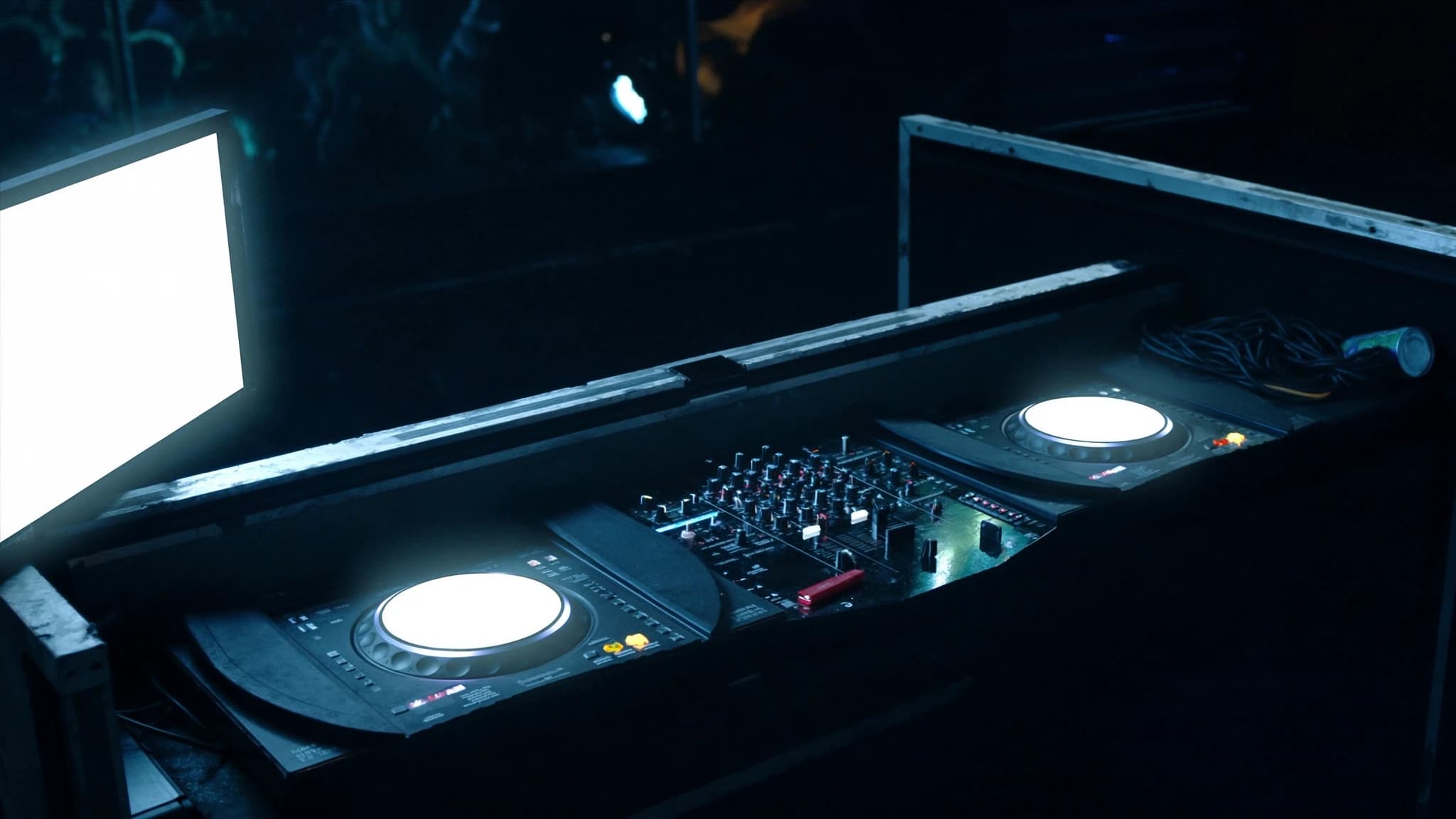
A hybrid DJ set moves beyond traditional two-deck mixing by incorporating hardware instruments and software into the performance. The core setup typically includes CDJs or turntables for playback, plus a sampler (e.g., Roland SP-404), drum machine (e.g., TR-8S), synthesizer (e.g., Moog Subsequent 37), and a laptop running Ableton Live or Traktor as a DAW/sequencer. All audio routes into a multi-channel mixer (e.g., Allen & Heath Xone:96 or Pioneer DJM-V10) that acts as the central hub.

This approach allows DJs to layer loops, trigger one-shots, manipulate effects, and even produce elements live—blurring the line between DJ and electronic musician. In 2026, hybrid sets are becoming standard at festivals and clubs because they offer unique, unrepeatable experiences that captivate audiences.

Signal Flow: Routing the Hybrid Rig

The key to a clean hybrid setup is understanding signal flow. Start with your sources: CDJs/turntables connect to the mixer's line/phono inputs. Samplers, drum machines, and synths output via balanced TRS or XLR into additional mixer channels. The DAW sends audio through a multi-channel audio interface (e.g., RME Fireface UFX II) into the mixer—often via separate outputs for stems (drums, bass, synths) to allow independent EQ and FX.

Your mixer's send/return loops are critical for integrating external FX units (e.g., Eventide H9, Strymon BigSky). Use aux sends to route channels to FX, then return the wet signal to a dedicated return channel. This keeps your master output clean and allows you to blend FX per channel. SSOUNDS engineers recommend labeling every cable and using a patchbay for quick reconfiguration during soundcheck.

Monitoring: Hear What You Need, Not What the Crowd Hears

Hybrid sets demand precise monitoring because you're juggling multiple sources. You need to hear your cue channel, the master mix, and possibly a click track or metronome from the DAW. Use a separate headphone mix from the mixer's cue system—most pro mixers allow you to assign multiple channels to cue. For in-ear monitoring (IEMs), run a dedicated aux send from the mixer to a wireless IEM transmitter.

If you're using a DAW for sequencing, send a click track to a separate output that feeds only your headphones or IEMs, never the master. SSOUNDS recommends using a small personal mixer (e.g., Behringer X32 Rack) for complex monitor mixes, giving you independent control over each source. On stage, ensure your monitor wedges or side fills are positioned to avoid feedback from open microphones on instruments.

PA Integration: Making the Hybrid Set Sound Massive

The PA system must handle the dynamic range and frequency content of a hybrid set—from sub-heavy kicks to shimmering synth pads. SSOUNDS line array systems are engineered for this: they provide consistent coverage across the venue, high SPL without distortion, and precise pattern control to keep sound on the audience, not the stage. For hybrid sets, we recommend a full-range system with dedicated subwoofers (e.g., SSOUNDS flown arrays with cardioid subs) to manage low-end from drum machines and basslines.

Work with the FOH engineer to ensure your mixer's master output is balanced (XLR) and at line level. Avoid clipping the PA input; use the mixer's master meter to keep peaks around 0 dB. If you're using external FX, make sure they don't introduce latency that throws off timing—SSOUNDS DSP systems can compensate for small delays, but it's best to keep FX units within 1 ms of latency. Always soundcheck with all gear playing to identify any ground loops or noise issues.

Essential Gear Choices for 2026

The hybrid DJ's toolkit in 2026 is more integrated than ever. For mixers, the Allen & Heath Xone:96 offers 6 stereo channels, 4-band EQ, and dual FX sends—ideal for complex routing. Pioneer's DJM-V10 has 6 channels plus 4 return channels, with built-in FX and a send/return per channel. For DAWs, Ableton Live 12's new hybrid session view makes it easy to trigger clips and automate parameters alongside CDJ playback.

Key instruments: Roland's TR-8S for drums, SP-404MKII for sampling, and a compact synth like the Arturia MicroFreak or Moog Subsequent 37. For FX, the Eventide H90 provides studio-quality reverbs and delays. SSOUNDS recommends using a UPS (uninterruptible power supply) for your laptop and interface to prevent crashes. And don't forget a sturdy table or stand for your gear—road cases with pre-wired panels save setup time.

Troubleshooting Common Hybrid Set Issues

Latency is the biggest enemy. If your DAW's output feels delayed, reduce buffer size in your audio interface settings (aim for 128 samples or lower). Use direct monitoring on your interface to hear inputs without DAW latency. Ground loops cause hum—use DI boxes with ground lift on any unbalanced gear. If your mixer's cue system can't handle all sources, use a separate headphone amplifier fed by an aux send.

Another common issue: level mismatches. Synths and drum machines often output at different volumes than CDJs. Use the mixer's trim/gain controls to match levels before EQ. SSOUNDS engineers suggest creating a gain structure checklist: set all channel faders to unity, adjust trims so each channel hits -12 dB on the meter, then fine-tune with faders. This ensures headroom and consistent mix.

Frequently asked

Do I need a separate mixer for hybrid DJing?

Yes, a multi-channel mixer (6+ channels) is essential to handle multiple audio sources and FX sends. Mixers like the Allen & Heath Xone:96 or Pioneer DJM-V10 are industry standards for hybrid setups.

Can I use a DJ controller instead of CDJs?

Absolutely. A controller like the Pioneer DDJ-1000 or Denon DJ Prime 4 can replace CDJs, but you'll still need additional inputs for your hardware instruments. Many controllers have limited line inputs, so a separate mixer may still be necessary.

How do I sync my DAW with CDJs?

Use MIDI clock sync: send MIDI clock from your DAW (via an interface with MIDI out) to your CDJs if they support MIDI (e.g., Pioneer CDJ-3000). Alternatively, manually beat-match by ear—many hybrid DJs prefer this for flexibility.

What's the best way to monitor a click track?

Route the click track from your DAW to a separate output that feeds only your headphones or IEMs. Use a personal mixer or an aux send from your main mixer to isolate the click from the master mix.

How can SSOUNDS help with hybrid DJ setups?

SSOUNDS provides professional PA systems engineered for the dynamic range and clarity hybrid sets demand. Our line arrays and subwoofers ensure even coverage and low distortion, while our DSP allows precise delay compensation and system tuning for complex signal chains.

Building or upgrading a system?

SSOUNDS engineers and manufactures professional PA worldwide — from a single room to stadium scale.

Talk to an engineer