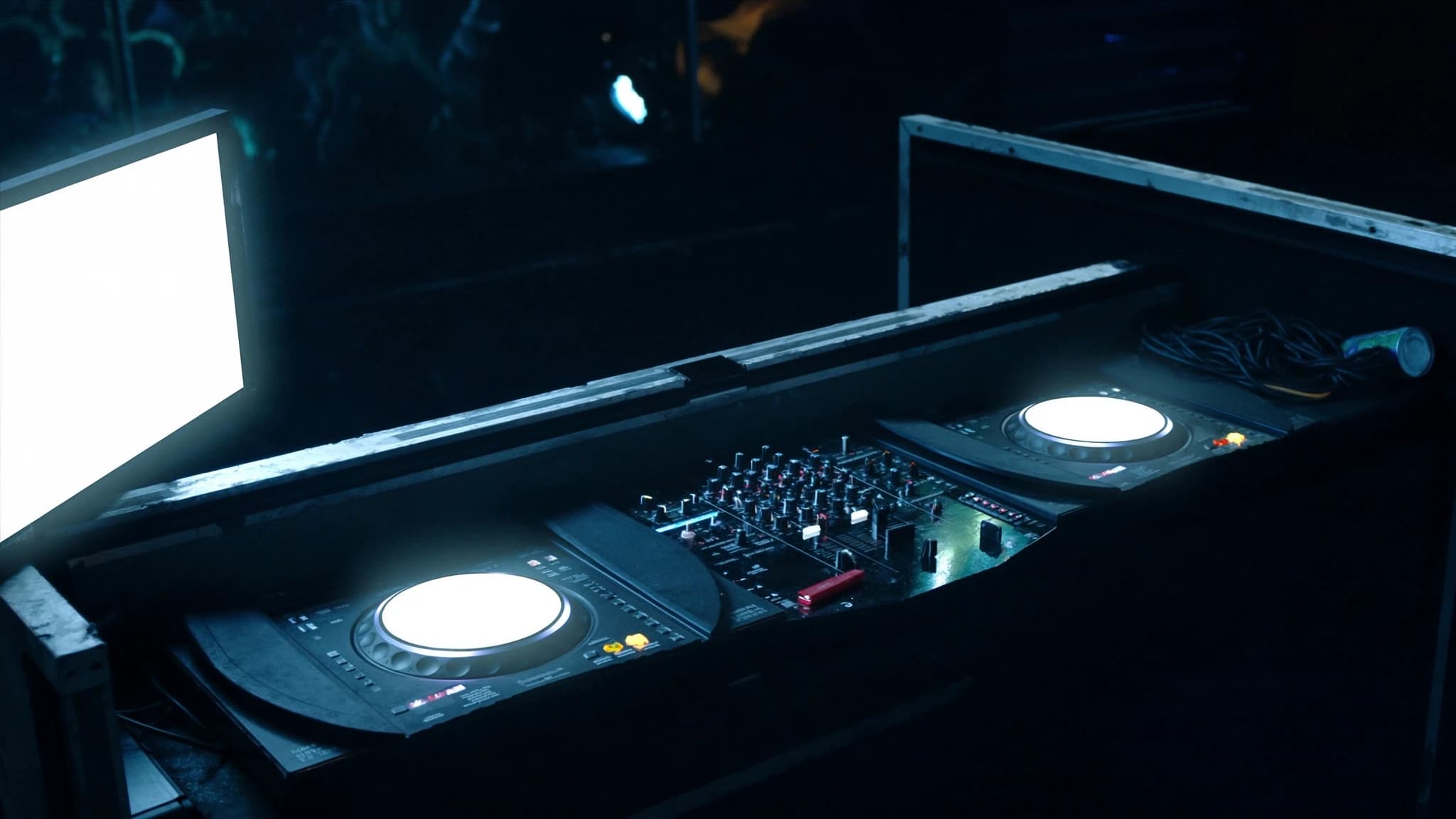
Hybrid DJ Sets: The Complete Guide

Hybrid DJing — blending CDJs or turntables with samplers, drum machines, synths, FX units and a DAW through a multi-channel mixer — is the defining live performance trend of 2026. This guide covers signal flow, monitoring, PA integration, and how SSOUNDS systems deliver the clarity and headroom these complex setups demand.
Key takeaways
- Hybrid DJing blends traditional DJ sources with live instruments and DAW, requiring careful signal flow and gain staging.
- A multi-channel mixer with send/return loops and robust cueing is essential for managing multiple audio sources.
- Monitoring is critical — use separate headphone mixes or IEMs to hear the master mix, cues, and your own instrument.
- PA systems must handle wide dynamic range; SSOUNDS line arrays and subs deliver consistent coverage and low-end punch.
- Latency and synchronization (MIDI clock, Ableton Link) must be managed with low-latency interfaces and stable clock sources.
- SSOUNDS loudspeakers and DSP amplifiers provide the clarity and headroom needed for complex hybrid performances.
What Is a Hybrid DJ Set?
A hybrid DJ set combines traditional DJ sources (CDJs, turntables) with live electronic instruments and a DAW, all routed through a multi-channel mixer. The result is a performance that blends pre-produced tracks with real-time manipulation — looping, triggering samples, sequencing synths, and applying effects — creating a unique, evolving soundscape.
This approach has exploded in popularity because it lets artists stand out in a crowded market. Instead of a standard track-to-track mix, the audience experiences a live remix or even a fully improvised set. For the performer, it offers creative freedom and a deeper connection with the music.
Signal Flow: The Backbone of Hybrid DJing
Understanding signal flow is critical. A typical hybrid setup starts with two or more CDJs/turntables feeding into a mixer’s line/phono inputs. Additional channels receive signals from a sampler (e.g., Roland SP-404), a drum machine (e.g., TR-8S), a synth (e.g., Moog Subsequent 37), and a DAW via a multi-channel audio interface.
The mixer becomes the central hub. Many hybrid DJs use a 4- to 6-channel rotary or DJ mixer with send/return loops for external FX. Some integrate a small analog mixer for submixing instruments before the main mixer. The key is to maintain clean gain staging: hot enough to drive the mixer without clipping, and consistent levels across all sources.
For monitoring, a separate headphone mix is essential. Many mixers offer cueing per channel, but with multiple sources, a dedicated monitor mixer (or a DAW-controlled cue bus) helps the performer hear exactly what they need. SSOUNDS recommends using a small analog mixer for monitor sends to avoid latency and keep the main mix clean.
Monitoring: Hear Everything, Miss Nothing
In a hybrid set, the performer must hear the master mix, individual channels, and their own instrument or DAW output simultaneously. This often requires multiple headphone mixes or in-ear monitors (IEMs). A common setup: one headphone mix for the main mix plus a cue channel, and a second mix for the performer’s own instrument.
For IEM users, a personal monitor mixer (like the Behringer P16 or a small analog mixer) allows independent control of each source. SSOUNDS engineers recommend using a monitor system with low latency and high isolation — especially when playing alongside loud PA systems. The SSOUNDS stage monitor range provides clear, phase-coherent sound that helps performers stay locked in.
PA Integration: Making the Hybrid Set Sound Huge
The PA system must handle the dynamic range of a hybrid set — from delicate synth pads to pounding kick drums. SSOUNDS line arrays and subwoofers are engineered for this: they deliver consistent coverage, high SPL without distortion, and precise low-end extension. For hybrid DJs, the subwoofer array is especially important because drum machines and synths often produce sub-bass frequencies that need to be felt, not just heard.
Signal routing to the PA should be balanced and isolated. Use a DI box for unbalanced instrument outputs, and ensure the mixer’s master output is set to line level. Many hybrid DJs use a separate output from their DAW for timecode or click tracks — these must be routed to the monitor system only, never to the main PA.
SSOUNDS DSP-controlled amplifiers allow fine-tuning of crossover points and EQ for the room, ensuring that every element of the hybrid set translates clearly. With advanced FIR filtering, phase coherence is maintained across the frequency spectrum, so the audience hears a cohesive soundstage.
Choosing the Right Mixer for Hybrid DJing
The mixer is the most important piece of gear. Look for at least four channels, preferably six or more. Features to prioritize: individual channel EQ (3-band with sweepable mid), send/return loops for external effects, balanced XLR outputs, and a robust cue system. Some hybrid DJs prefer rotary mixers for smoother volume control, while others stick with faders for quick cuts.
Digital mixers with built-in effects and USB audio interfaces (like the Allen & Heath Xone:96 or Pioneer DJM-V10) are popular because they integrate seamlessly with a DAW. However, analog mixers offer a warmer sound and simpler operation. SSOUNDS recommends testing both types in a live setting to see which workflow suits you.
Latency and Synchronization: Keeping It Tight
Hybrid sets often rely on MIDI clock or Ableton Link to sync drum machines, samplers, and DAWs with the DJ mixer’s tempo. Latency can be a killer. Use a dedicated audio interface with low round-trip latency (under 10ms), and keep buffer sizes small. For MIDI, a dedicated sync box (like the ERM Multiclock) can stabilize clock signals.
If using Ableton Live, enable Link and set the mixer’s master tempo as the source. For hardware sequencers, send MIDI clock from the DAW or a master device. Always test the sync before the show — a drifting beat will ruin the performance. SSOUNDS engineers advise running a separate monitor mix with a click track for the performer if timing is critical.
SSOUNDS: The Professional Choice for Hybrid DJs
SSOUNDS loudspeakers and subwoofers are built to reproduce the full frequency range of hybrid sets with accuracy and power. Our systems feature advanced waveguide technology for consistent coverage, even in challenging venues. The SSOUNDS line array series offers 120° horizontal dispersion, ensuring every audience member hears the same mix — from the synth arpeggios to the kick drum.
Our subwoofers use high-excursion drivers and vented enclosures to deliver deep, punchy bass without distortion. For hybrid DJs, this means the low-end from drum machines and synths is reproduced faithfully. SSOUNDS amplifiers include DSP presets optimized for each cabinet, making system tuning fast and reliable.
With a global support network and a reputation for reliability, SSOUNDS is the choice of professionals who demand the best. Whether you're playing a club, festival, or intimate venue, our systems ensure your hybrid set sounds exactly as you intended.
Frequently asked
What is the best mixer for a hybrid DJ setup?
The best mixer depends on your workflow. For analog warmth and simplicity, a rotary mixer like the Condesa Carmen or a classic DJM-900. For digital integration, the Allen & Heath Xone:96 or Pioneer DJM-V10 offer USB audio interfaces and flexible routing. Aim for at least 4 channels with send/return loops.
How do I sync a drum machine with CDJs?
Use MIDI clock. Connect the drum machine’s MIDI IN to a MIDI output from your mixer (if it has one) or from a dedicated sync box like the ERM Multiclock. Alternatively, use Ableton Link over WiFi if your devices support it. Always test sync before the show.
Can I use a laptop as a sound source in a hybrid set?
Yes, but use a dedicated audio interface with multiple outputs. Route individual tracks or stems to separate mixer channels for independent EQ and FX. Keep the laptop’s internal audio disabled to avoid latency and noise.
What PA system is best for hybrid DJ sets?
A system with high headroom and consistent coverage, like SSOUNDS line arrays and subwoofers. They handle the dynamic range of synths and drum machines without distortion, and their DSP ensures optimal tuning for any venue.
How do I avoid feedback when using external effects?
Use send/return loops with proper gain staging. Keep the send level moderate and the return level balanced. Use a gate or noise suppressor on the return channel if needed. Always monitor with headphones before engaging FX on the main mix.
Building or upgrading a system?
SSOUNDS engineers and manufactures professional PA worldwide — from a single room to stadium scale.