Applications
Airport Sound and Public Address Systems
An airport announcement has one chance to be understood, in a building made of glass and concrete that was designed to look like the future.
What this application asks of a system
A terminal is an intelligibility problem before it is anything else. The architecture that makes airports impressive, glass curtain walls, polished stone, exposed structure and volumes tens of metres high, is also what gives them long reverberation times and almost no absorption. Announcements are speech, the meaning of speech sits in the consonants, and quiet consonant cues are the first thing a long decay buries. Raising the level does not rescue it, because the reverberant field rises with the direct sound, and past a point an announcement becomes louder and less intelligible at the same time.
So the lever is directivity and listener distance rather than power. Many sources close to the listener, each covering a defined area with a tight pattern, beat a few loud sources covering everything, because what the ear needs is a high ratio of direct to reverberant energy at head height. That is why terminal systems are distributed rather than centralised, why column arrays and tightly controlled point source appear where the volume is tall, and why the design should be judged on coverage uniformity and intelligibility rather than on output.
The noise floor also moves through the day. A terminal at five in the morning and the same terminal during a peak departure wave are different acoustic environments: the ambient noise is higher and the absorption is higher too, because a crowd is absorbent. A system set for the empty building is inaudible when it is full, and one set for the peak is punishing when it is quiet, so the design has to account for both conditions rather than one.
Then the operational requirements stack up. A page may need to reach one gate, one pier, one hall or the whole terminal, and airline, airport and security messages carry different priorities. Many airports now run a quiet-terminal policy where the general announcement is deliberately rare and the zoned one carries the load, which raises the bar for zoning granularity. And the life-safety voice alarm function is a separate, certified system that the public address design has to coexist with rather than replace.
What we look at first
- Reverberation time and absorption measured in the actual building, before loudspeaker positions are fixed
- Distributed coverage at short listener distances, which is what lifts the direct-to-reverberant ratio at head height
- Zoning granularity: gate, pier, hall and terminal, and the priority order between airline, airport and security messages
- Ambient noise and absorption that change between a quiet hour and a departure wave, and how the system handles both
- Coexistence with the certified life-safety voice alarm system, which is a separate scope
- Tall, hard volumes where a ceiling grid cannot reach the floor, so columns and controlled point source carry the coverage
- Pattern control that keeps energy off glass, stone and exposed structure
Why SSOUNDS for this
We treat a terminal as a speech transmission problem and we publish the method. Our engineering note on speech intelligibility sets out where intelligibility lives in the signal, the mechanism that destroys it, the Speech Transmission Index as the measure that matters, and the loudspeaker properties that actually move it. The VoxClear voicing discipline named in that note exists for exactly these rooms, and it names transport terminals among them. You can read how we design before you buy anything.
Because we design the loudspeakers, the amplifiers and the processing, the zone matrix, the paging priority and the alignment delay between adjacent positions are one system with one configuration file rather than three products negotiating with each other through someone else's control layer.
Recommended SSOUNDS products
Grouped by the job each product does in this kind of system. Specifications live on the product pages and in the data sheets, so nothing is restated here.
Concourses, atria and check-in halls
Tall, hard, reverberant volumes. Column arrays and controlled point source put energy on people at head height and keep it off the glass.

SSOUNDS
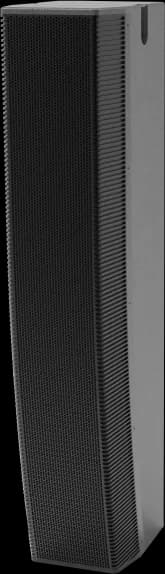
SSOUNDS LC16.3
16 × 3″ full-range column, 127° × 24°, for announcements and speech in airports, stations and mosques.
SSOUNDS
SSOUNDS LC100
The largest LC column: 24 × 1″ over 6 × 6.5″, 65 Hz to 16 kHz, 134 dB peak, pairs with the LC100B.

SSOUNDS
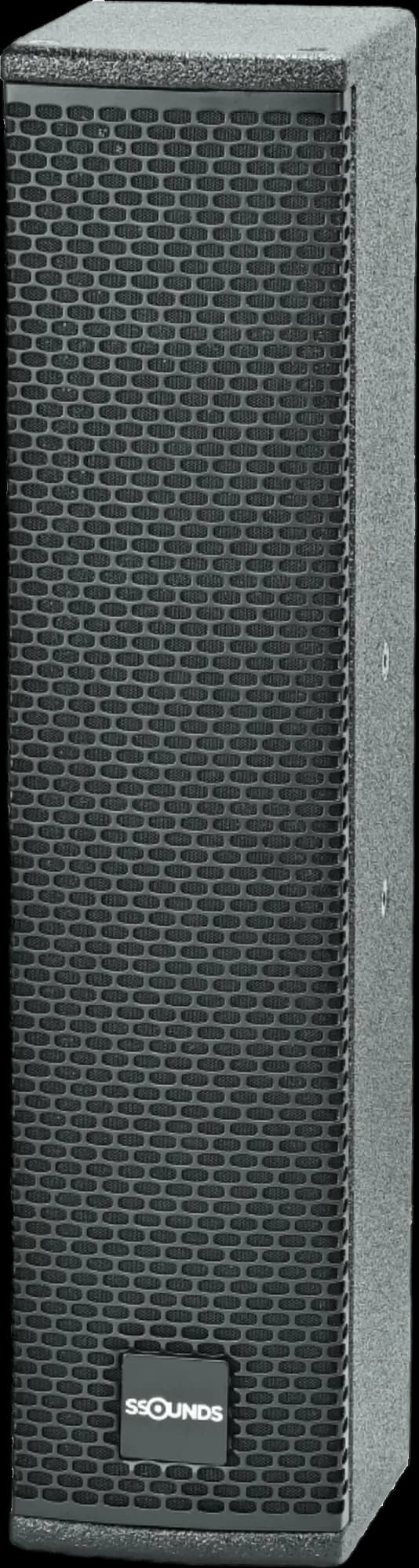
SSOUNDS M3.12P
3″ × 12 full-range column array, long-throw speech intelligibility for reverberant rooms.
SSOUNDS
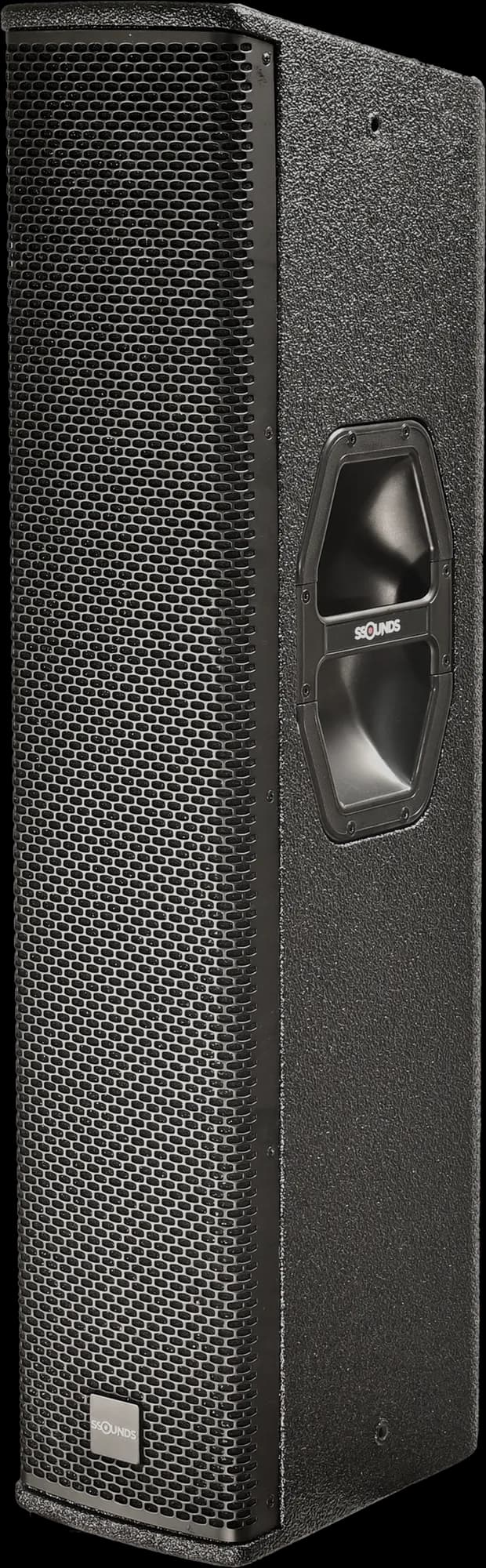
SSOUNDS M3.6P
Compact 3″ × 6 full-range column array, clean speech and music for architectural install.
SSOUNDS
SSOUNDS XTO 4.6
Column element of the XTO System, passive line array, 4 × 6.5″ drivers, 65 Hz – 20 kHz and 134 dB peak in a sightline-friendly column.
Gates, piers and holding areas
Zoned coverage at short listener distance, where a page has to reach one gate and stop there.
SSOUNDS
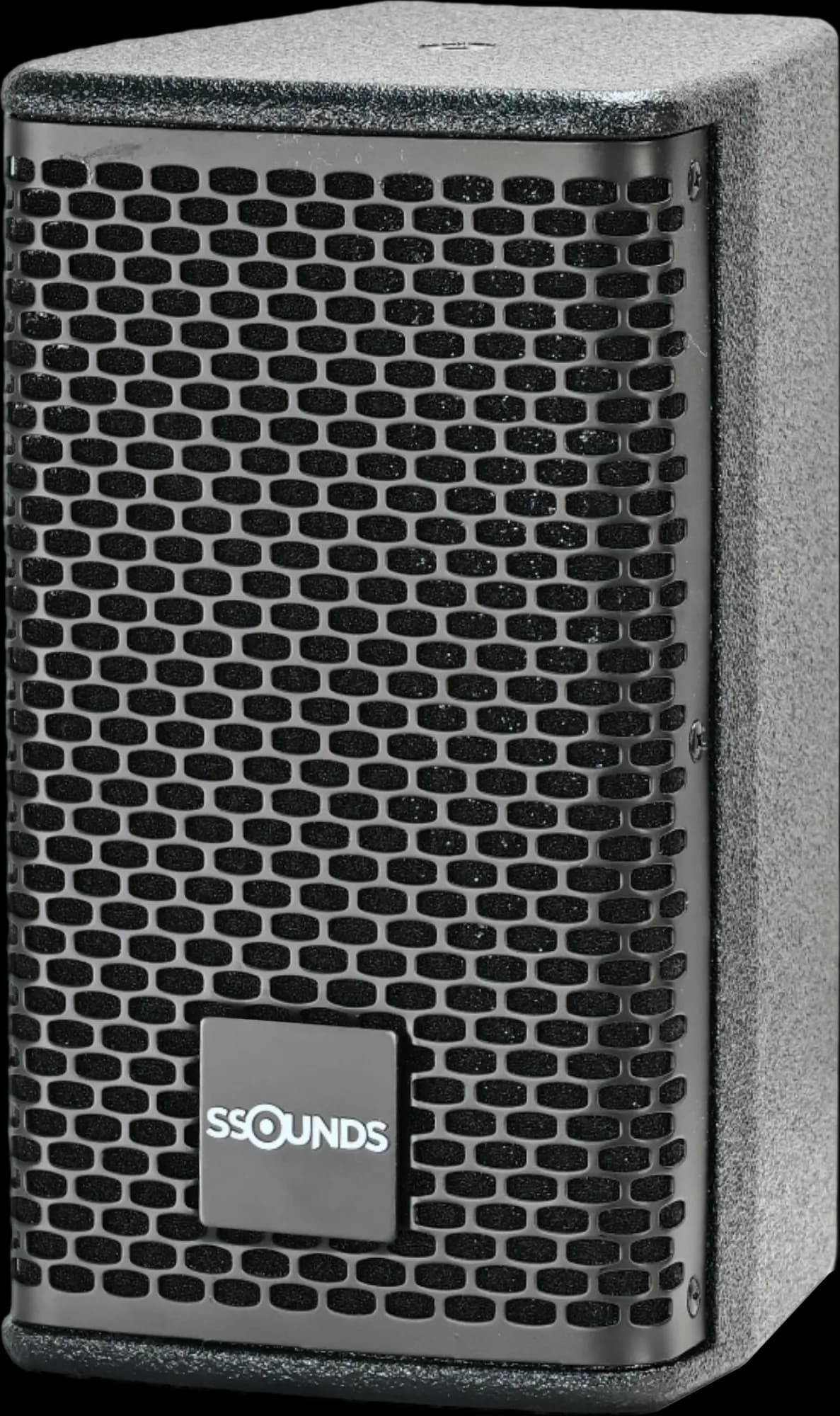
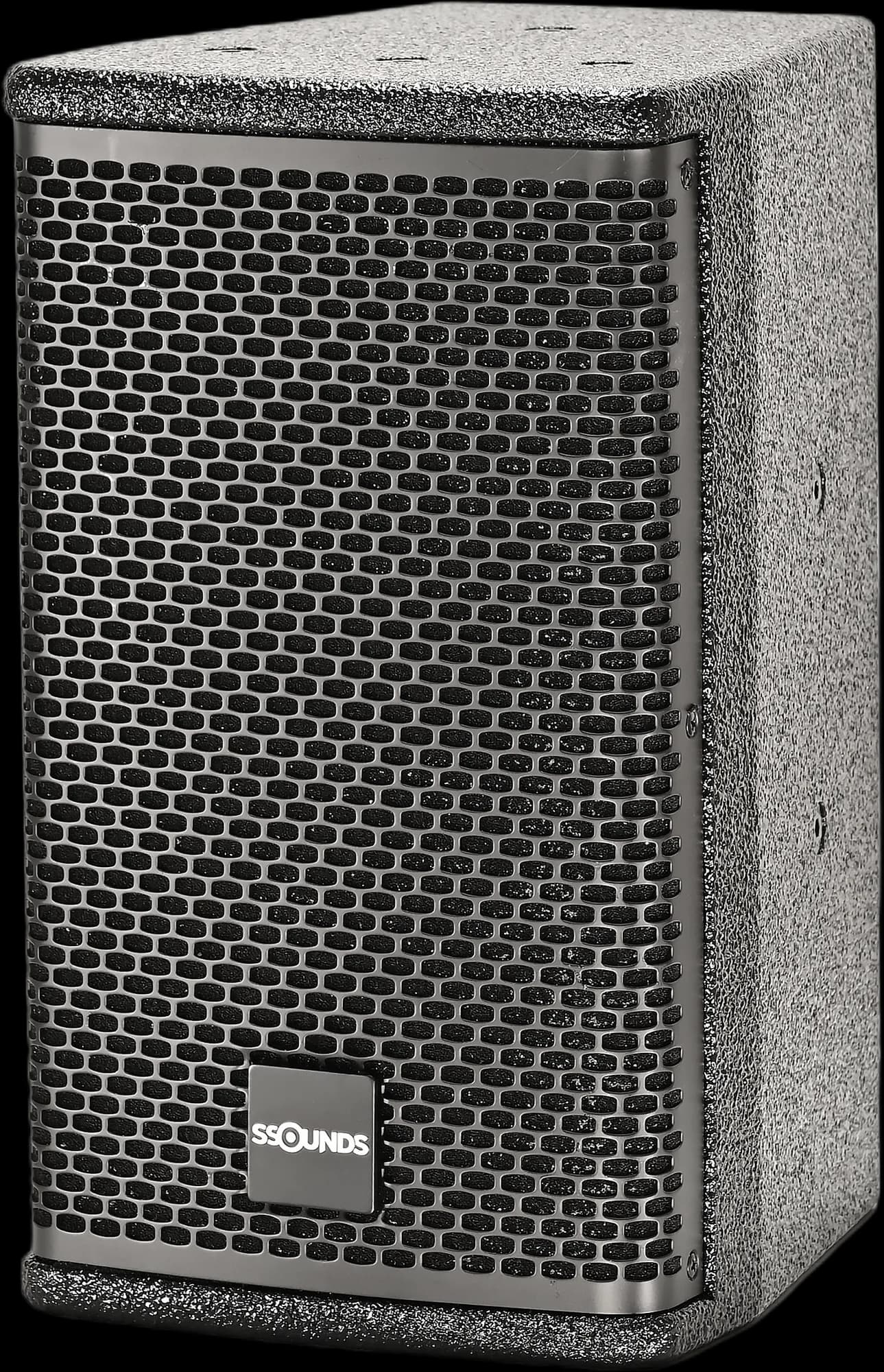
SSOUNDS M-4
Ultra-compact 4″ full-range, discreet fill and foreground audio with M-rigging.
SSOUNDS
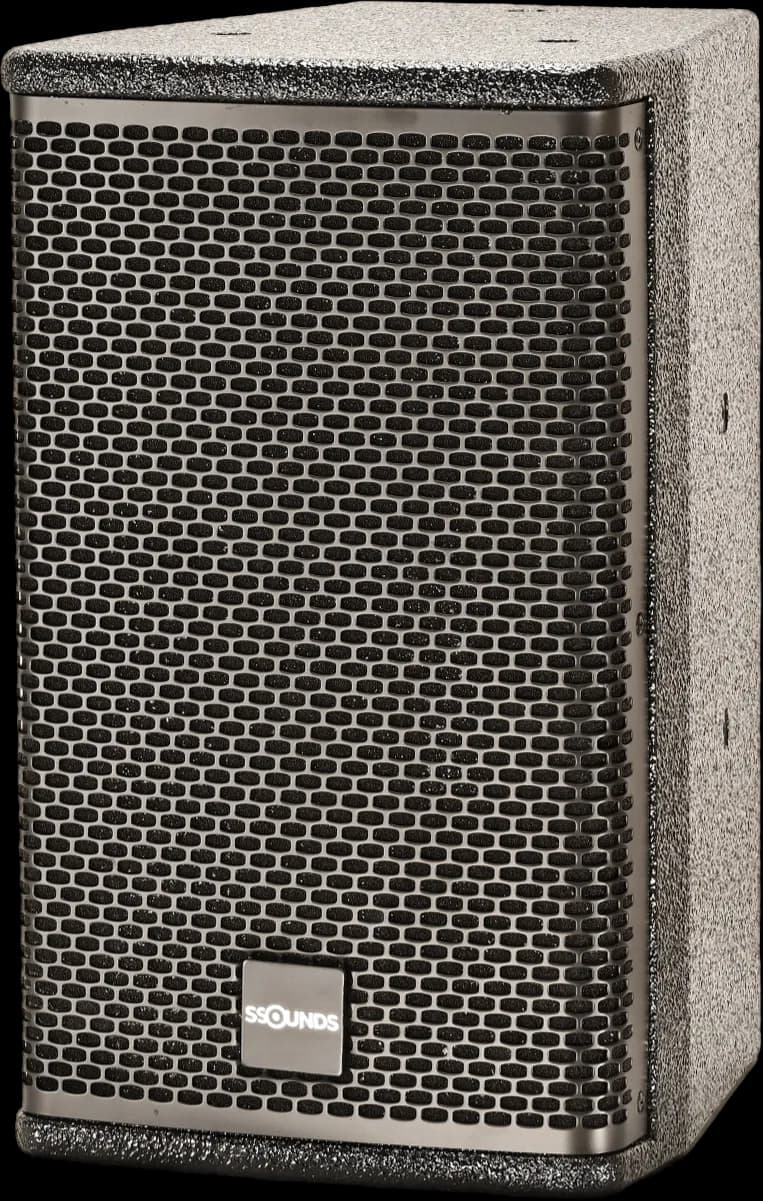
SSOUNDS M-6
Compact 6.5″ full-range, versatile install and portable speaker with M8 rigging.
SSOUNDS
SSOUNDS M-8
8″ full-range, high-output multipurpose box for portable PA, fill and install.
Baggage halls, long circulation and high spaces
Loud, reflective, high-ceilinged areas where the throw is long and the pattern has to stay narrow.
SSOUNDS
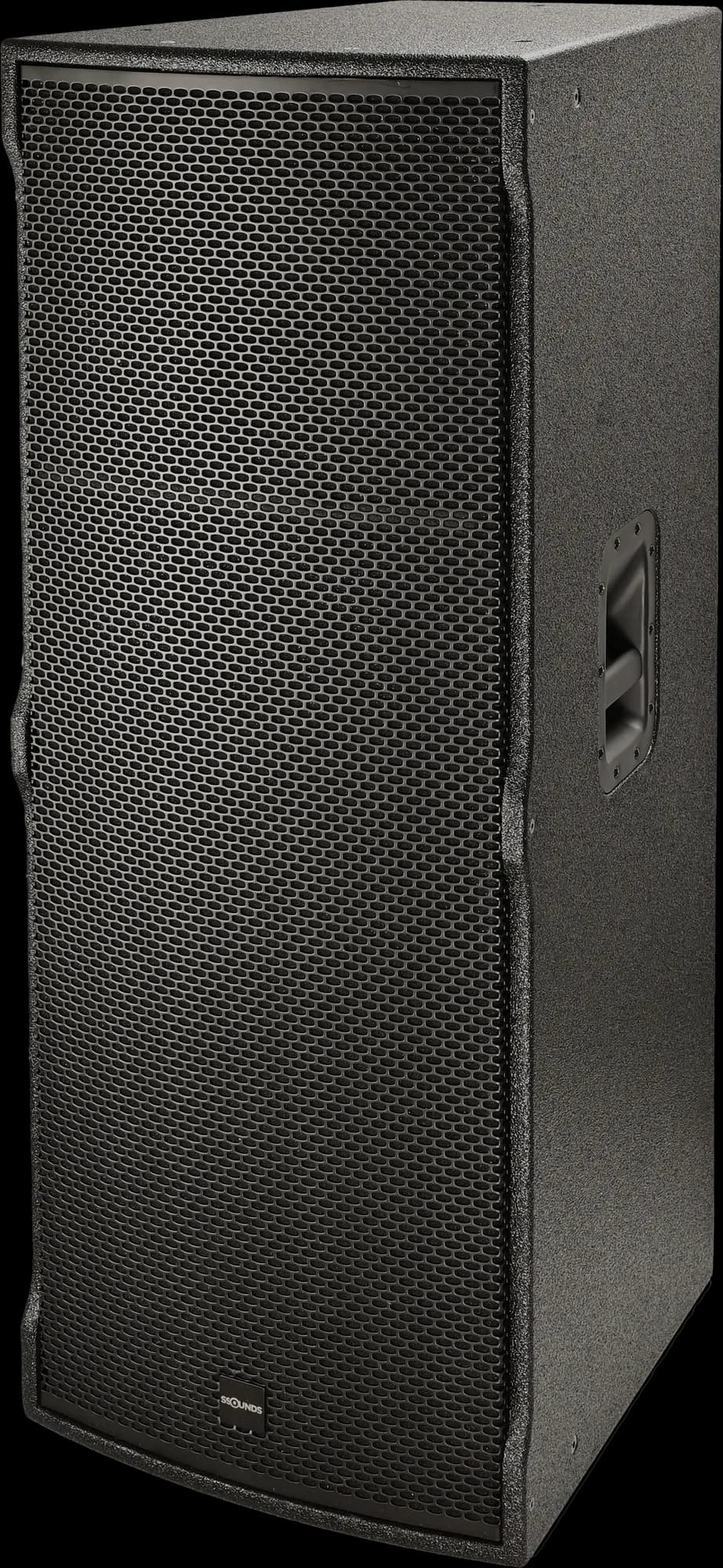
SSOUNDS P15-X
3-way long-throw point source, 2 × 15″, 4 × 6.5″ and 2 × 3″ behind a 70° × 40° waveguide, 2,000 W.
SSOUNDS
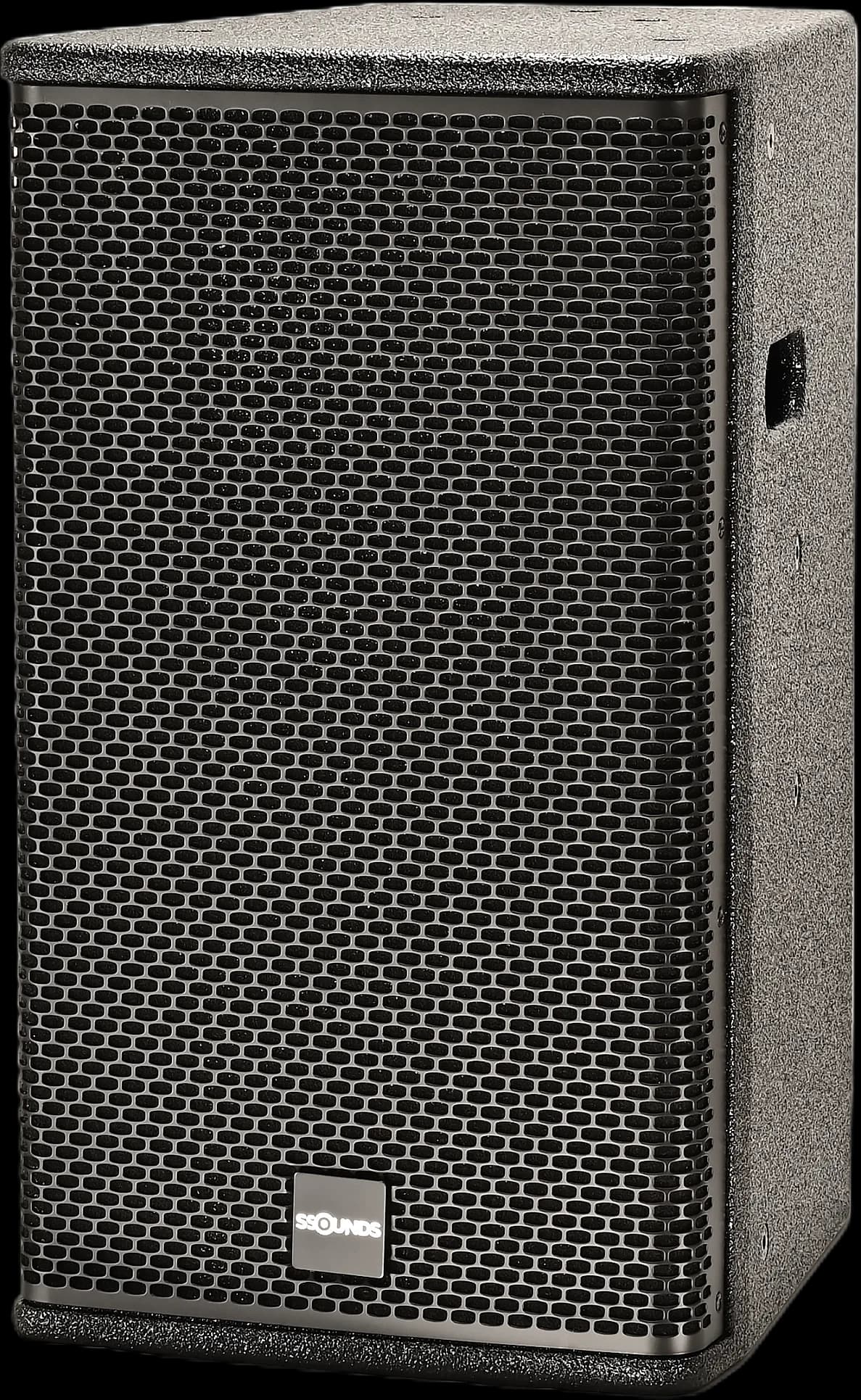
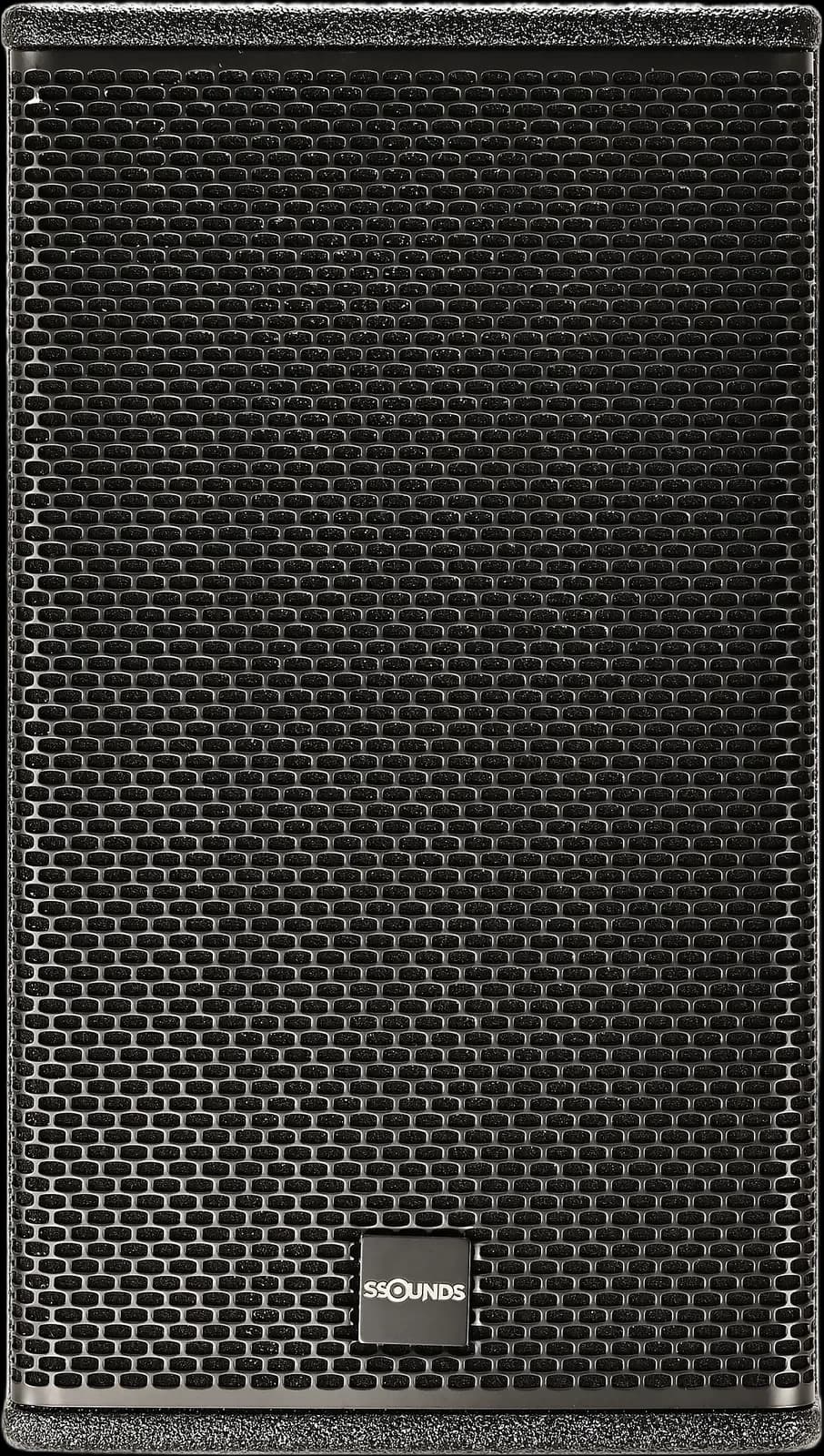
SSOUNDS M-10
10″ full-range, compact mains or monitor with strong vocal projection.
SSOUNDS
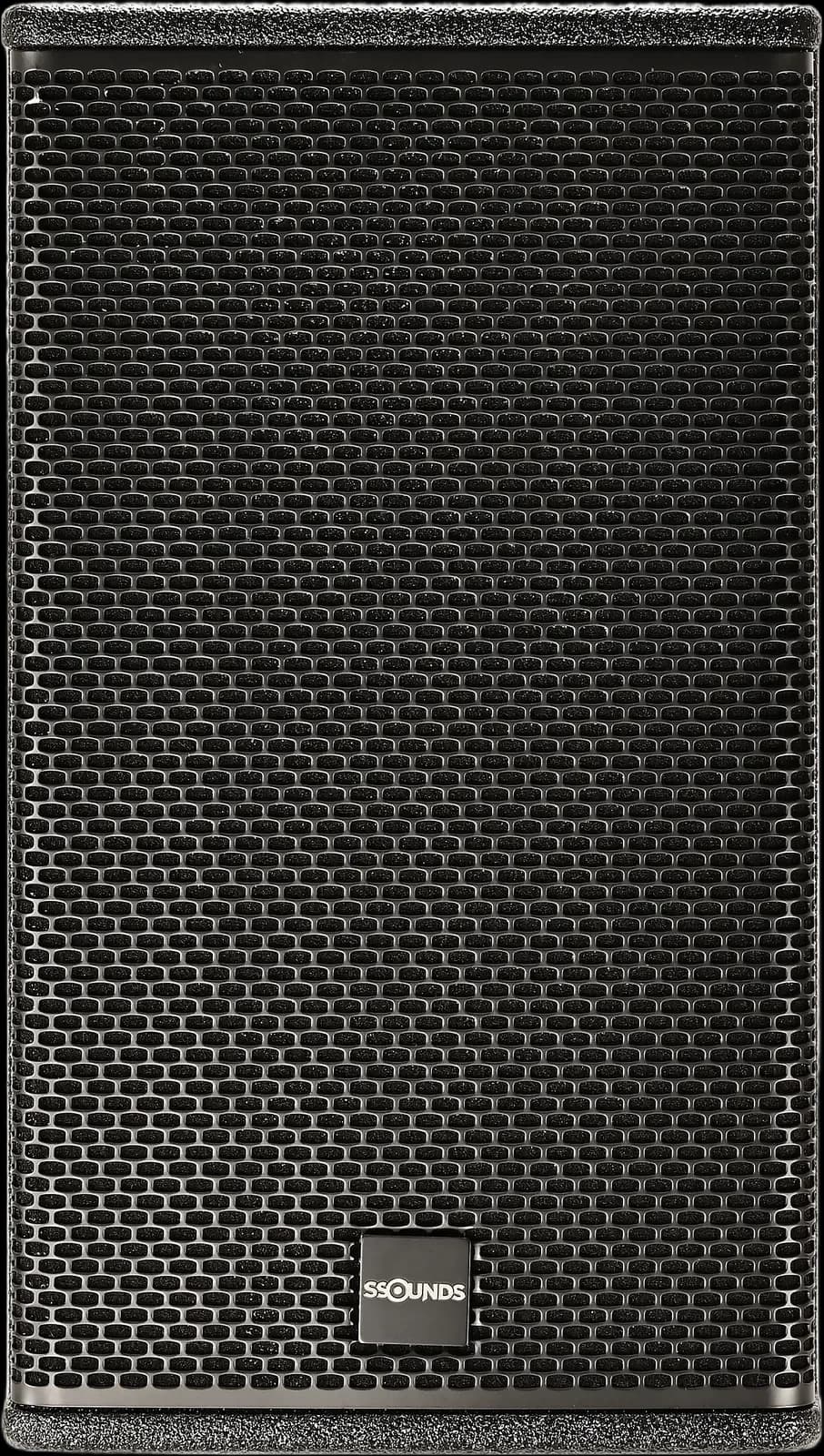
SSOUNDS M-12
12″ full-range point source, mains or floor wedge, the all-rounder of the M-series.
SSOUNDS
SSOUNDS M-15
15″ two-way point source, 55 Hz – 20 kHz, 137 dB peak, passive or bi-amplified.
Distributed ceiling audio
Offices, lounges, corridors, retail units and back of house on 70/100 V lines.

SSOUNDS
SSOUNDS CL6
6.5″ two-way ceiling speaker, discreet, even distributed audio with 70/100 V tapping.

SSOUNDS
SSOUNDS CL8
8″ two-way ceiling speaker, full-range background and foreground audio with 70/100 V tapping.

SSOUNDS
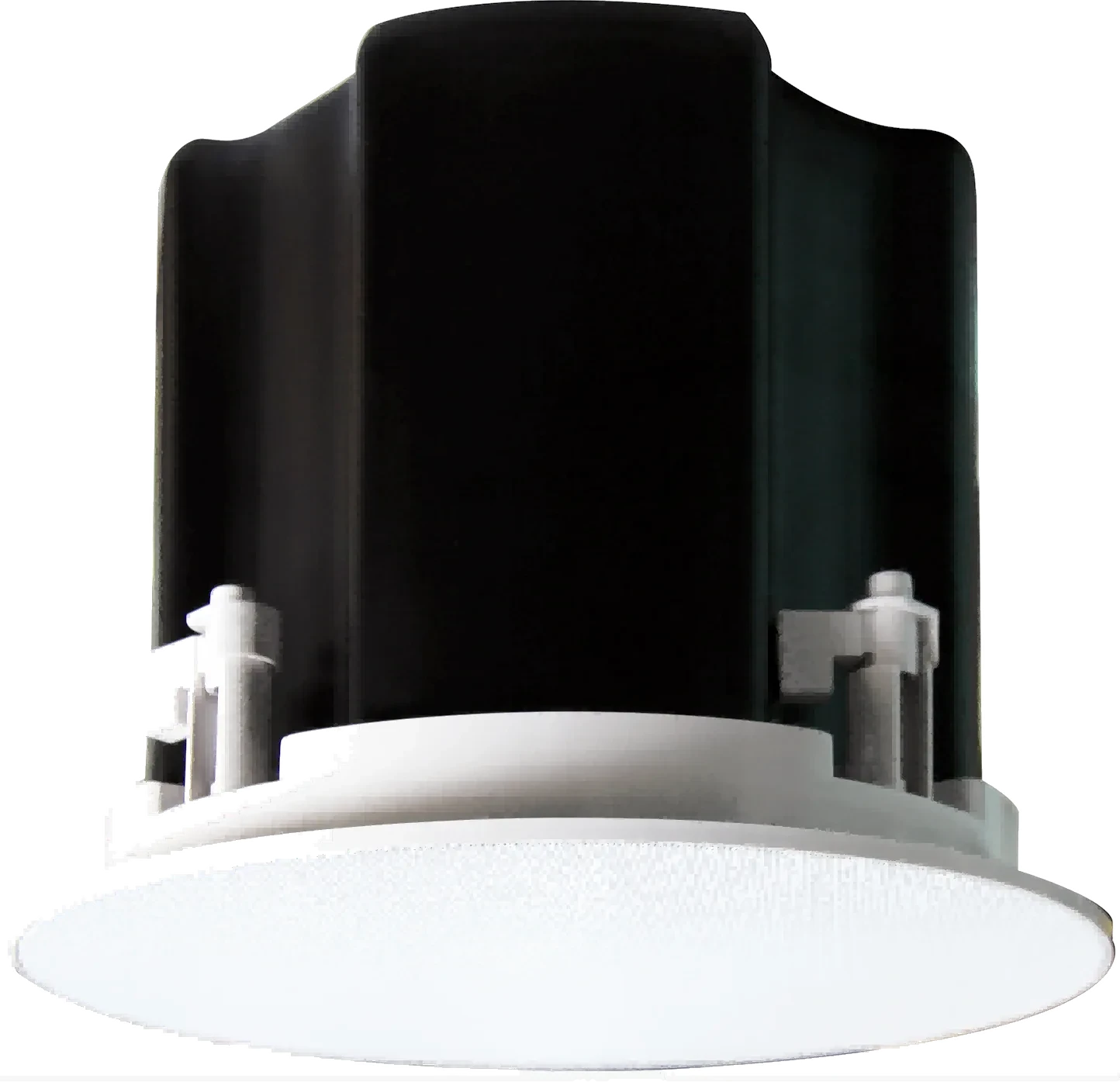
SSOUNDS CL6HD
6.5″ two-way ceiling speaker with its own amplifier and DSP, Dante audio and PoE power on one network cable.
SSOUNDS
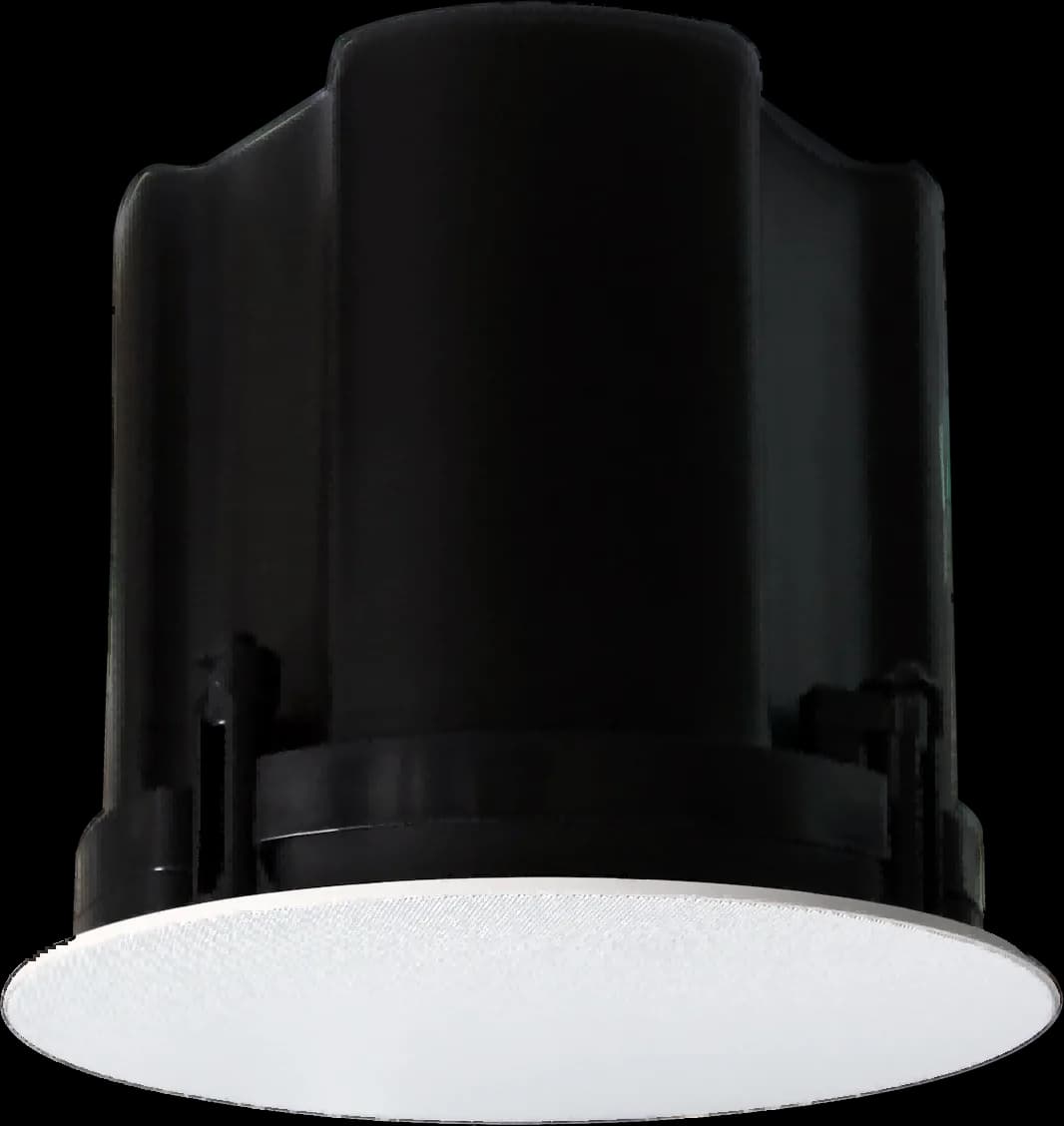
SSOUNDS CL8HD
8″ two-way ceiling speaker with its own amplifier and DSP, Dante audio and PoE power on one network cable.
Amplification, zoning and processing
Zone matrix, paging priority, alignment delay between adjacent positions, and per-zone limiting.

SSOUNDS
SSOUNDS A14X
4-channel touring amplifier for line arrays, 4 × 2,000 W @ 4 Ω, analog input.

SSOUNDS
SSOUNDS D14X
4-channel DSP amplifier with FIR, line-array power plus full system processing and presets.
SSOUNDS
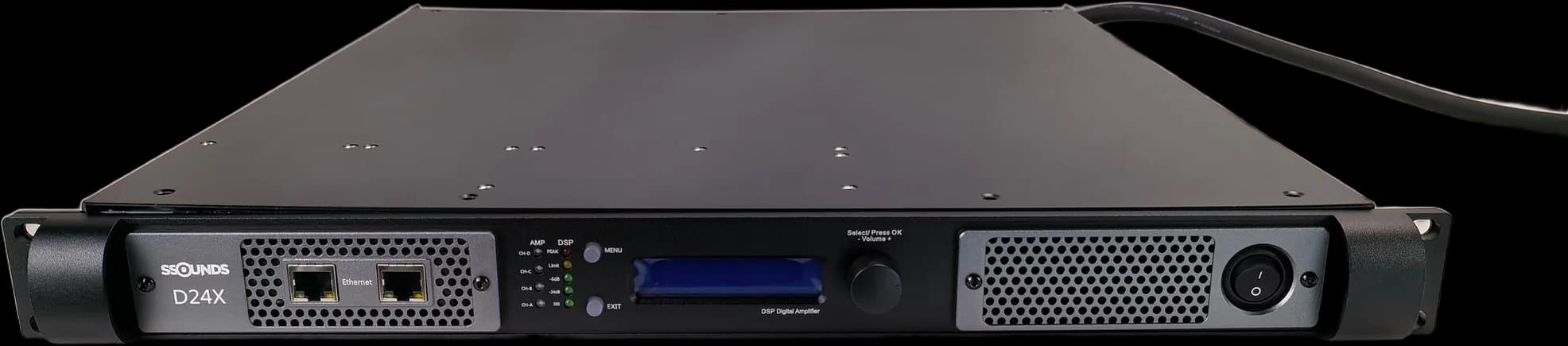
SSOUNDS D24X
High-power 4-channel DSP amplifier, subwoofer-grade output with full FIR processing.

SSOUNDS
SSOUNDS DSP 4×8
4-in / 8-out loudspeaker processor, 96 kHz, 1/36-octave filters and full system alignment.
LED video
Flight information, wayfinding and advertising displays for terminal interiors and exterior facades.
Unilumin
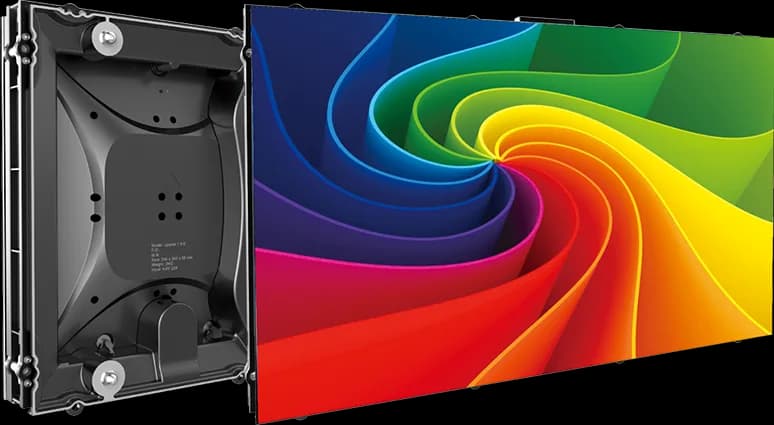
Unilumin UpanelS
Fully front-serviceable 16:9 fine-pitch wall, native 2K/4K/8K builds from P0.9 to P2.5.
Unilumin
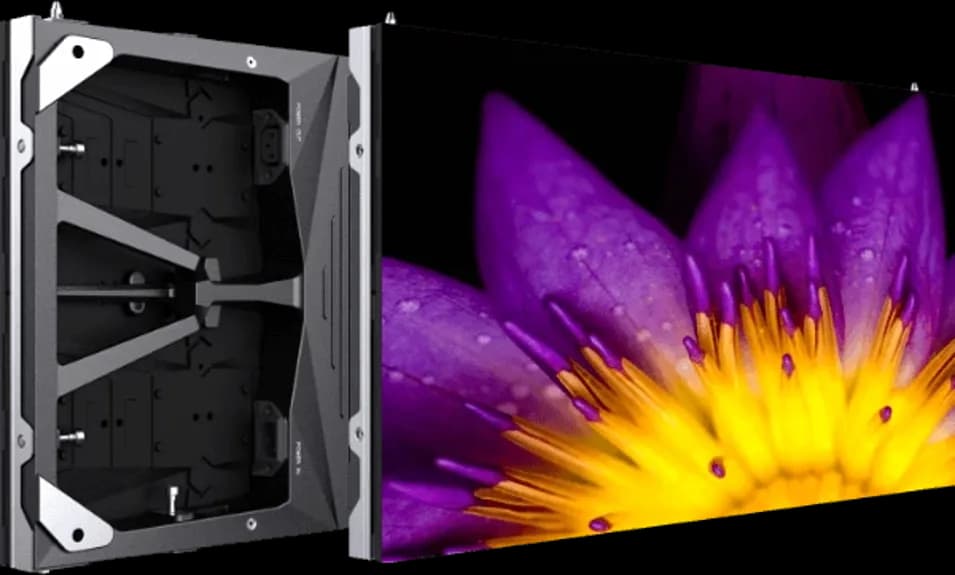
Unilumin UMini III Pro
Flip-chip COB micro-pitch. P0.9, 30,000:1 contrast, cool-touch boardroom flagship.
Unilumin
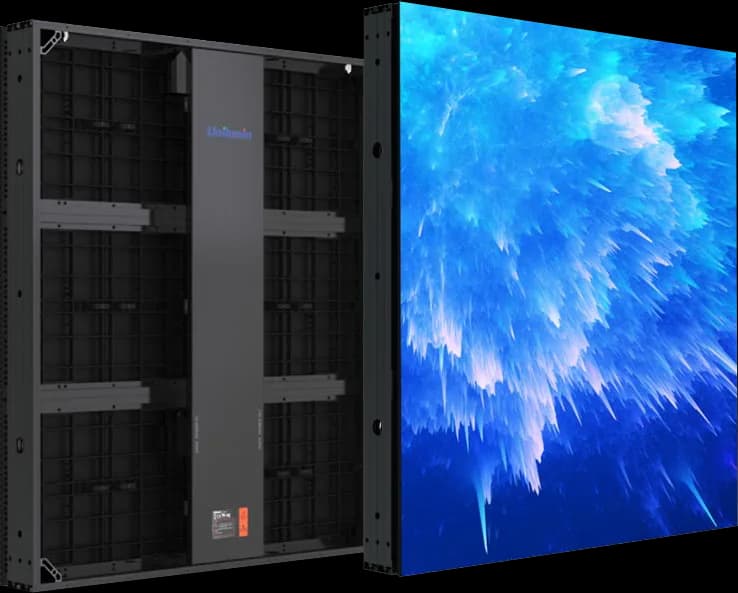
Unilumin Usurface III
High-brightness outdoor SMD, up to 10,000 nits, IP65 both sides, billboard and stadium grade.
AIXCEL
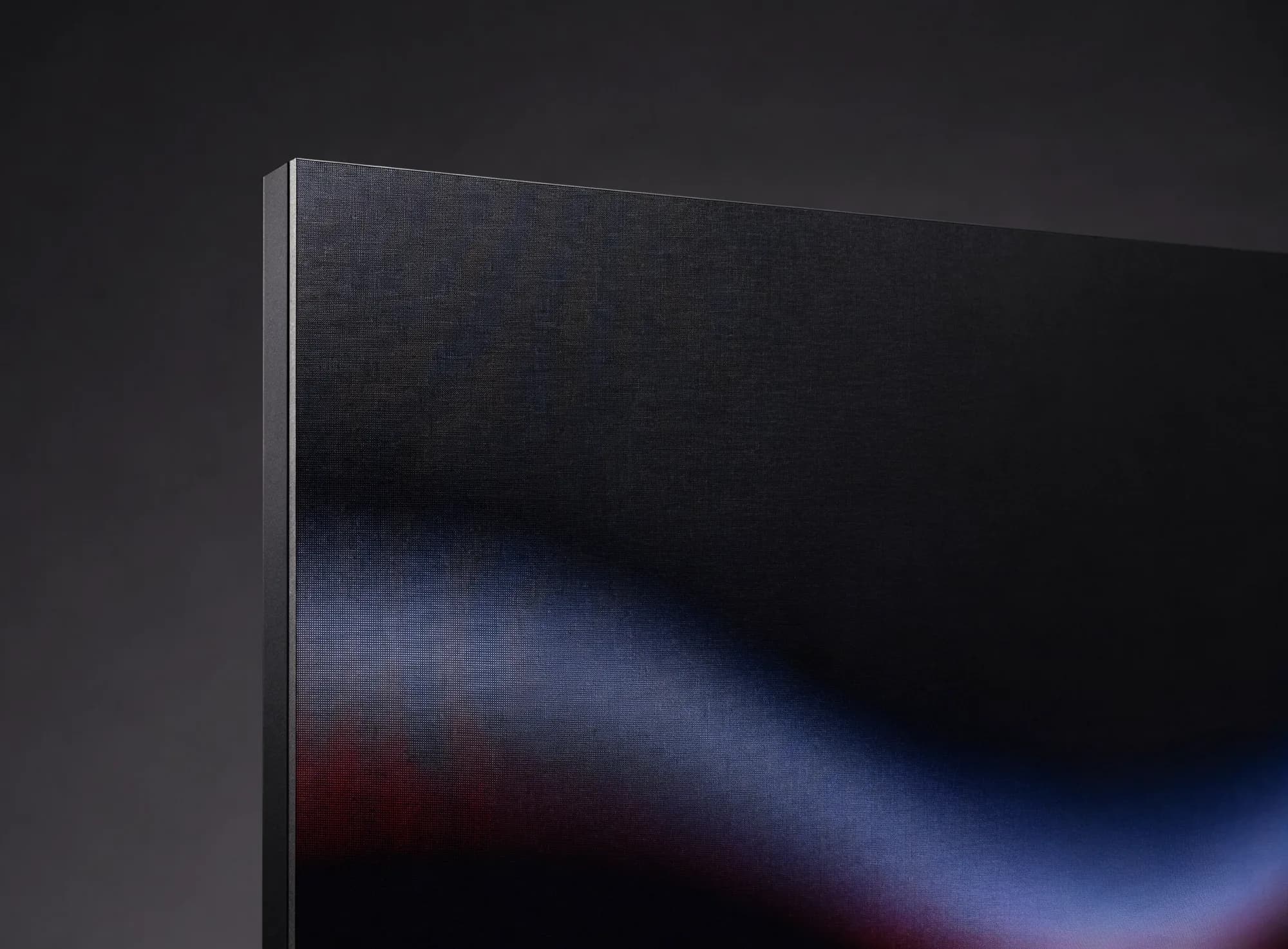
AIXCEL FP Fine-Pitch Indoor LED Wall
P1.2 / P1.5 / P1.8 fine-pitch indoor LED, seamless 16:9 panels for boardrooms, studios and control rooms.
Kerbside, forecourts and covered outdoor areas
Weather-exposed positions where an announcement has to carry over traffic and the loudspeaker lives in the rain and sun.
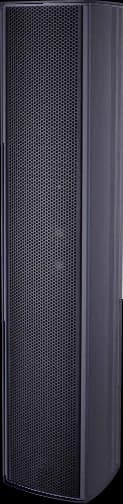
Why these products. The M3.12P is described in the catalogue as engineered for long-throw speech intelligibility in halls and reverberant architectural spaces, with twelve 3 inch full-range drivers in a tight vertical line keeping energy off hard ceilings and walls and no crossover to lobe through the vocal band, which is the terminal problem stated in the product's own words. The P15-X is our long-throw point source on a 70 by 40 degree constant-directivity waveguide, and the catalogue is explicit that the narrow pattern exists to hold intelligibility at distances where a conventional two-way has given up. The CL6 and CL8 are distributed install speakers with selectable 70/100 V or 8 Ohm operation. Our published engineering note on speech intelligibility sets out the VoxClear voicing discipline for spaces where reverberation works against the spoken word, and names transport terminals as one of them. The LC16.3 is sixteen 3 inch full-range drivers in a 1401 mm straight line at 127 by 24 degrees and names airport terminals, the LC100 names airport concourses and terminals, and the LC9.4W is an IP66 die-cast aluminium column that names airport forecourts. The CL6HD and CL8HD are Dante ceiling speakers powered over the network cable that name airports.
Guides for this application
Get this specced for your room
Send us the drawings, the seat count and what the room has to do. Our engineers model the coverage and come back with a product list, a rigging plan and a budget.